Toy group · Small · from Germany
Miniature Pinscher
Also called: Min Pin, Zwergpinscher, King of Toys
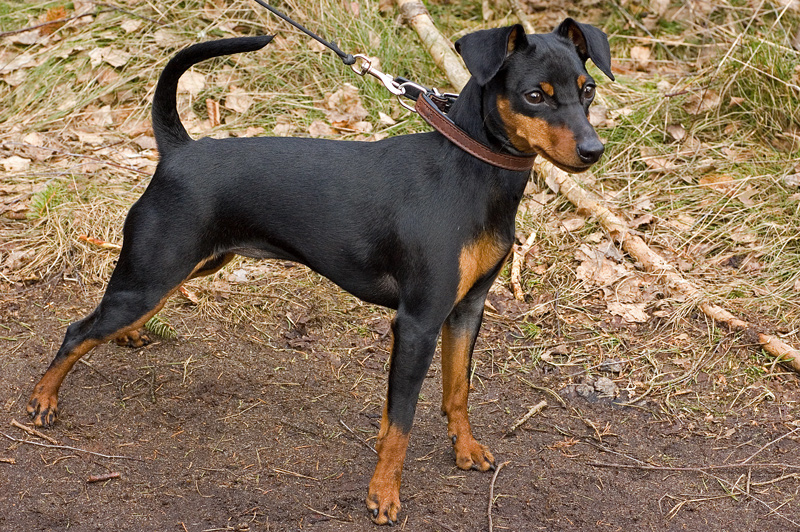

The Miniature Pinscher — the self-styled 'King of Toys' — is not a mini Doberman but an older German ratter with a hackney gait and an outsized ego. The honest headline from owners: endlessly entertaining, shockingly athletic, and a full-time escape artist who assumes every rule is negotiable.
Height
10-12.5 in
Weight
8-10 lbs
Lifespan
12-16 years
Coat
Short, smooth, hard coat
Exercise
45+ min/day
Puppy price
$1,000-$2,500
AKC popularity
#67
Best for
Active, patient owners who want a comedian with the self-assurance of a Doberman in a 9-pound body — and who own a very secure fence.
Trait scores
Scored 1–5 from breed-club and kennel-club standards. Individual dogs vary; a lazy Malinois exists somewhere.
Living with a Miniature Pinscher
Summarized from public owner discussions — breed subreddits, owner forums, and long-term owner write-ups.
What owners like
- +Wash-and-wear coat: grooming is a weekly wipe with a cloth, done
- +Genuinely athletic and agile; Min Pins excel at agility and can hike further than their legs suggest
- +Long-lived and generally hardy, commonly reaching 14-16
- +Superb watchdog instincts — nothing enters your airspace unreported
Common complaints
- −Escape artistry is a breed sport: they climb, dig, squeeze, and bolt, and an open door is a starting gun
- −Top-tier barking — the watchdog instinct has no volume knob without serious training
- −High energy for a toy breed; the cuddly-lapdog buyers end up with a frustrated acrobat
- −Prey drive makes cats and small pets a gamble
- −Thin coat and low body fat mean they genuinely suffer in cold weather — coats and heated beds required
Conditions the breed is prone to
Not a diagnosis list — these are the problems that show up often enough that responsible breeders screen for them. Ask to see the test results.
What people ask about the Miniature Pinscher
Is a Miniature Pinscher just a small Doberman?+
No — the Min Pin is actually the older breed, developed in Germany as a barnyard ratter, and any resemblance to the Doberman is cosmetic. Temperament-wise they're less handler-focused and more independent than Dobermans. Owners who expect a biddable mini-Dobe get a surprise; owners who expect a self-employed comedian are delighted.
Why does everyone warn about Min Pins escaping?+
Because it's the number-one thing new owners learn the hard way. Min Pins are fast, tiny, agile, and curious, and they treat gaps under fences, open gates, and slow door-closers as invitations. The breed community's standard advice: leash or secured area always, microchip immediately, and practice recall knowing you may never fully trust it.
Are Min Pins good apartment dogs?+
Size-wise, perfect; noise-wise, it depends on you. They're serious alert barkers, so apartment success means early training of a quiet cue, blocking street views, and giving them enough exercise that they nap instead of patrol. An under-exercised Min Pin in a thin-walled building is how you meet your neighbors.
How much exercise does a Miniature Pinscher need?+
More than their size suggests — figure 45 minutes of real activity daily, plus indoor play and mental work. They're not marathon dogs, but they have terrier-grade motors and get destructive and shrieky when bored. A tired Min Pin is a delightful blanket-burrowing companion; an under-stimulated one is a tiny chaos engine.