Herding group · Medium · from Australia
Australian Cattle Dog
Also called: Blue Heeler, Red Heeler, Queensland Heeler
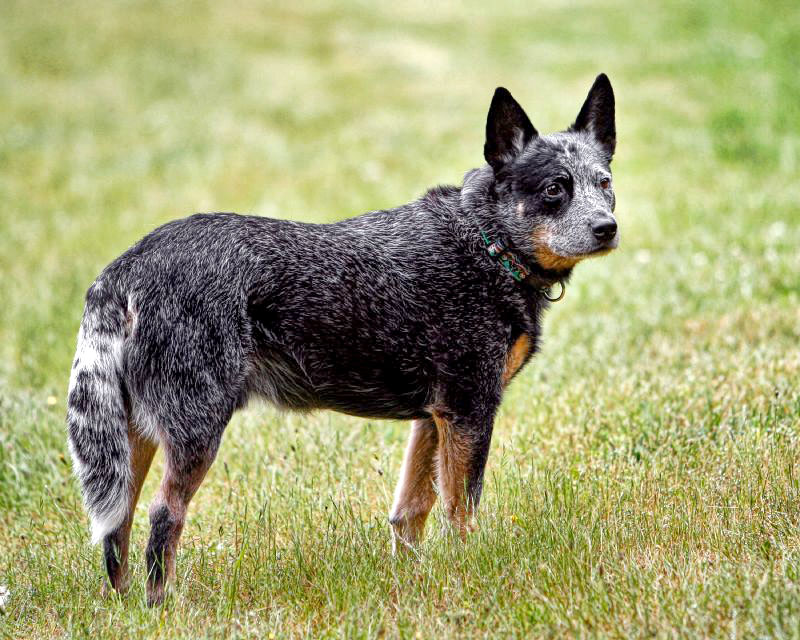

The Australian Cattle Dog was engineered from herding stock and Dingo blood to move stubborn cattle across brutal outback distances by biting heels — and every bit of that job description survives in the modern dog. The honest headline: ferociously loyal, nearly indestructible, and one of the longest-lived breeds, but the mouthiness, suspicion of strangers, and work drive make this a specialist's dog.
Height
17-20 in
Weight
35-50 lbs
Lifespan
12-16 years
Coat
Smooth double coat, blue or red speckle
Exercise
120+ min/day
Puppy price
$800-$2,000
AKC popularity
#49
Best for
Tough, experienced, very active owners — ranchers, serious hikers, sport-dog people — who want a one-person shadow with working-dog grit and no small kids underfoot.
Trait scores
Scored 1–5 from breed-club and kennel-club standards. Individual dogs vary; a lazy Malinois exists somewhere.
Living with a Australian Cattle Dog
Summarized from public owner discussions — breed subreddits, owner forums, and long-term owner write-ups.
What owners like
- +Legendary loyalty — a Heeler bonds to its person with a devotion that borders on telepathy
- +Extreme durability and stamina: an all-terrain, all-weather trail partner that never quits first
- +One of the longest-lived active breeds — 14-16 years is common, and the world's oldest verified dog (Bluey) was an ACD
- +Wickedly clever problem-solver that thrives on jobs, puzzles, and dog sports
- +Nearly zero grooming — a weekly brush and done, with surprisingly little barking for a herder
- +A naturally watchful, honest alarm system that misses nothing on your property
Common complaints
- −They're called Heelers because they bite heels — herding by mouth is hard-wired and lands on kids, guests, and joggers without serious training
- −Genuinely suspicious of strangers; socialization is a permanent project, not a puppy-class checkbox
- −Needs a real job — two hours of hard exercise plus mental work, or they redecorate with their teeth
- −Can be dog-selective to dog-aggressive, especially same-sex, and plays too rough for many dogs
- −Velcro shadow with a hard stare — some people find the intensity of being watched constantly unnerving
- −Congenital deafness runs in the breed (linked to the coat genetics), so BAER-test puppies before buying
Conditions the breed is prone to
Not a diagnosis list — these are the problems that show up often enough that responsible breeders screen for them. Ask to see the test results.
The Australian Cattle Dog against its usual rivals
What people ask about the Australian Cattle Dog
Are Blue Heelers aggressive?+
Not inherently, but they're bred to be pushy, mouthy, and suspicious, which reads as aggression when unmanaged. A well-socialized, well-worked ACD is aloof with strangers and devoted to family; an under-socialized, bored one may nip guests and pick fights at the dog park. The breed's bite-first herding style means training and management are mandatory, not optional.
Are Australian Cattle Dogs good with kids?+
With respectful older kids in the dog's own family, usually fine — even devoted. The problems are running toddlers and visiting children, whose movement triggers heel-nipping, and the breed's low tolerance for ear-pulling nonsense. Most breed-savvy folks recommend Heelers for households with kids 8+ or no kids, and constant supervision below that.
How much exercise does a Heeler need?+
Plan for two hours daily of real work — running, hiking, fetch, plus training or puzzle time — and understand that pure exercise without mental engagement just builds endurance. These dogs moved cattle across Australian stations all day; a stroll and a backyard don't register. Under-worked Heelers become destructive, barky, and increasingly nippy.
Do Australian Cattle Dogs really live that long?+
Yes — this is one of the breed's genuine superpowers. Well-cared-for ACDs routinely reach 14-16, staying active into their teens, and Bluey, the longest-lived dog ever verified, was an ACD who made 29. The flip side: you're signing up for a demanding dog for potentially two decades, so plan accordingly.