Hybrid group · Large · from Australia
Labradoodle
Also called: Australian Labradoodle (multigen lines)
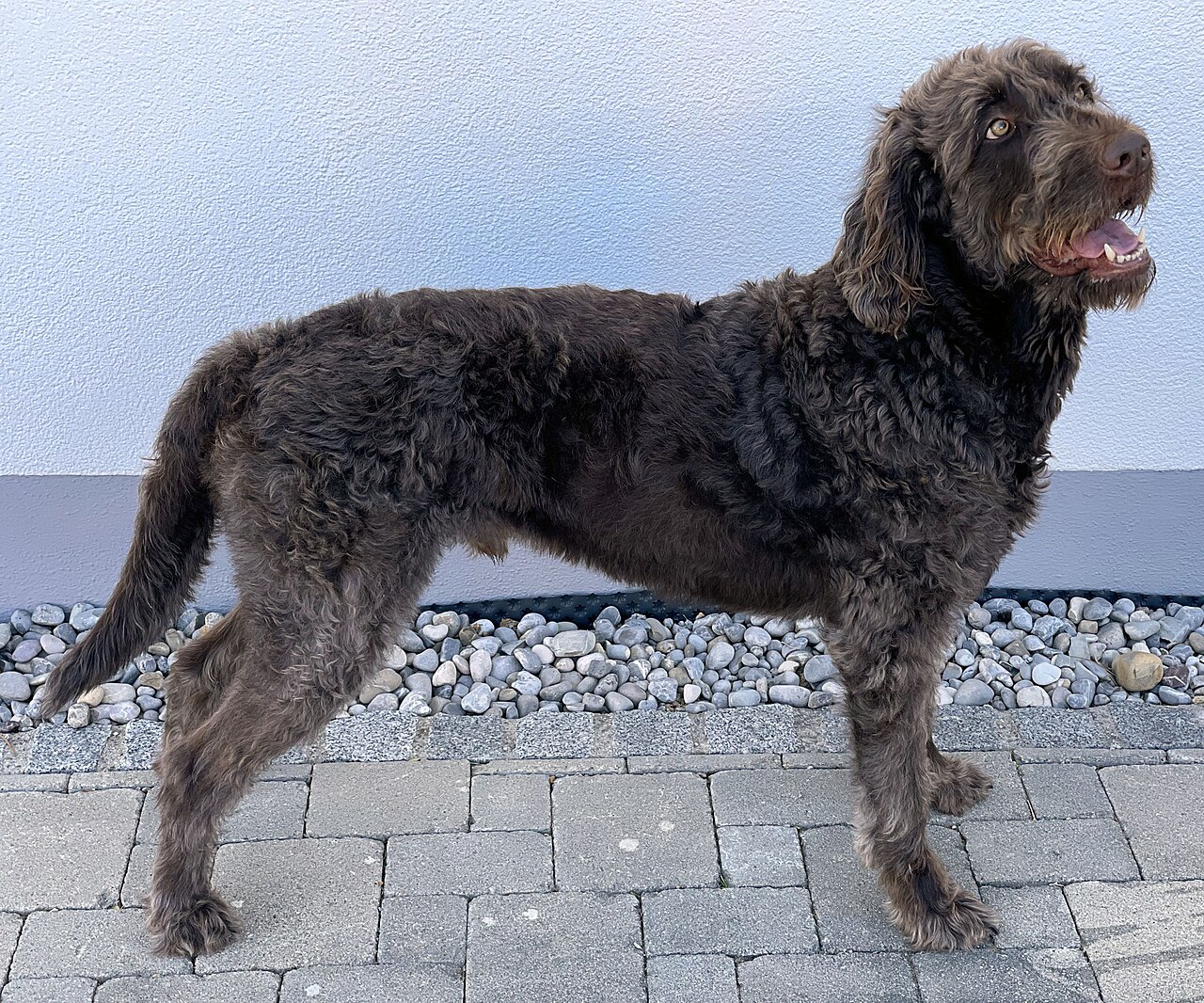

The Labradoodle — a Lab x Poodle cross first bred in Australia for a blind woman whose husband had allergies — kicked off the entire doodle craze. The honest headline: a fun, bouncy, people-loving athlete, but even the cross's own creator lamented what casual breeding did to it, and the coat you get ranges from shedding Lab-hair to full Poodle wool with everything between.
Height
21-24 in
Weight
50-65 lbs
Lifespan
12-14 years
Coat
Highly variable — flat shedding hair, fleece, or tight wool
Exercise
75+ min/day
Puppy price
$1,500-$3,000
AKC popularity
Not AKC ranked
Best for
Energetic households who want a sociable, athletic family dog and can handle both serious grooming and a puppy whose adult coat is a surprise.
Trait scores
Scored 1–5 from breed-club and kennel-club standards. Individual dogs vary; a lazy Malinois exists somewhere.
Living with a Labradoodle
Summarized from public owner discussions — breed subreddits, owner forums, and long-term owner write-ups.
What owners like
- +Classic temperament is joyful and social — a Lab's love of everyone with a dash of Poodle cleverness
- +Athletic all-rounders that swim, fetch, hike, and make great adventure-buddy family dogs
- +Fleece-coated individuals shed very little — a huge upgrade over a fur-everywhere Lab
- +Smart and food-motivated, so basic training comes quickly for consistent owners
- +Well-bred lines benefit from hybrid parents with different weak points, and 12-14 years is a solid run for this size
- +Australian Labradoodle programs (multigenerational, coat-tested) offer far more consistency than random Lab x Poodle pairings
Common complaints
- −The coat is genuinely unpredictable: hair coats shed like a Lab, wool coats mat like a Poodle, and you won't know until the adult coat comes in around 8-12 months
- −Whatever coat arrives, grooming is significant — most need thorough brushing several times a week plus professional grooms every 6-8 weeks
- −The name sells puppies, so backyard breeders and mills are rampant — health testing must be verified, not assumed
- −Lab-grade energy plus Poodle brains: an under-exercised, under-stimulated Labradoodle is a loud, destructive handful
- −Floppy, hairy ears trap moisture — chronic ear infections are one of the most common owner complaints
Conditions the breed is prone to
Not a diagnosis list — these are the problems that show up often enough that responsible breeders screen for them. Ask to see the test results.
The Labradoodle against its usual rivals
What people ask about the Labradoodle
Labradoodle vs Goldendoodle — which is right for me?+
They overlap heavily, but the stereotype holds surprisingly often: Labradoodles run a bit more energetic and boisterous (Lab side), while Goldendoodles skew slightly softer and more mellow (Golden side). Coat unpredictability is similar for both. Honestly, the individual breeder's lines matter far more than which doodle you pick.
What is an Australian Labradoodle, and is it different?+
Yes — it's not just a Labradoodle bred in Australia. Australian Labradoodles come from multigenerational breeding programs (with Cocker Spaniel mixed in historically) that select for consistent fleece coats and temperament, with their own breeder associations and testing requirements. They're more predictable and more expensive than an F1 Lab x Poodle; if coat consistency matters to you, they're worth a look.
Do Labradoodles shed?+
Some do, and this is the most common buyer's-remorse post on doodle forums. Hair-coated Labradoodles (common in F1 litters) shed like a moderate Lab; fleece coats shed minimally; wool coats barely shed but demand Poodle-level grooming. A breeder who tests for the coat genes can tell you the odds — one who just says 'non-shedding!' can't.
How much exercise does a Labradoodle need?+
Plan on a real hour-plus daily — these are two working retrieving breeds combined, not a teddy bear. A long walk plus fetch, swimming, or a run keeps most of them civilized; skip a couple of days and you'll meet the zoomies-and-chewing version. Mental work (training games, food puzzles) buys you as much calm as mileage does.