Working group · Large · from Switzerland
Bernese Mountain Dog
Also called: Berner, Bernese
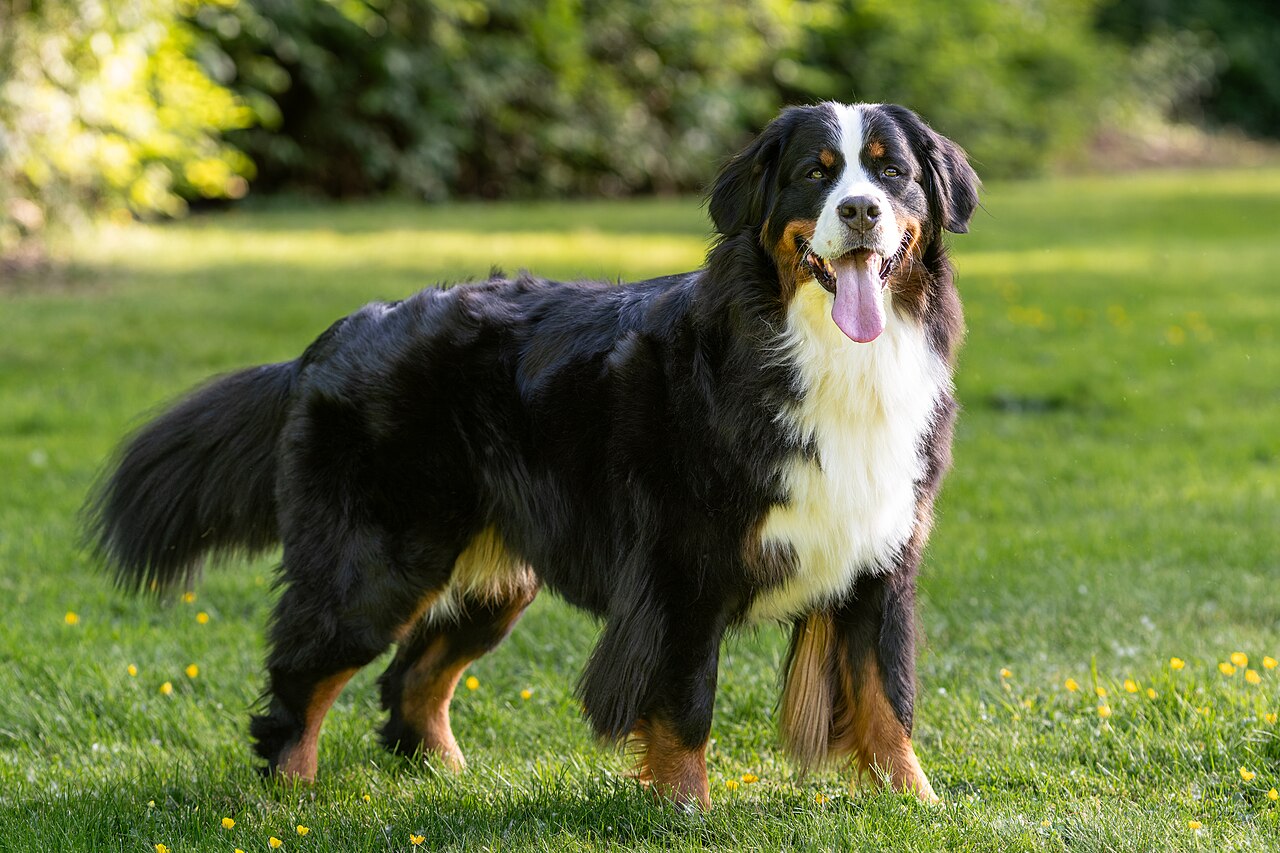

The Bernese Mountain Dog is the golden retriever of the mountains: a stunning tricolor Swiss farm dog that adores its family, tolerates kids like a saint, and looks like a living plush toy. The breed's tragedy is written in the numbers — cancer, especially histiocytic sarcoma, cuts many Berners down at 6-8 years. Owners describe the deal bluntly: the best dog of your life, for not nearly long enough.
Height
23-27.5 in
Weight
70-115 lbs
Lifespan
7-10 years
Coat
Thick tricolor double coat, moderately long
Exercise
60+ min/day
Puppy price
$2,000-$3,500
AKC popularity
#20
Best for
Cool-climate families who want a gentle, striking farm dog for hikes and cuddles, and who can emotionally and financially handle the breed's brutal cancer odds.
Trait scores
Scored 1–5 from breed-club and kennel-club standards. Individual dogs vary; a lazy Malinois exists somewhere.
Living with a Bernese Mountain Dog
Summarized from public owner discussions — breed subreddits, owner forums, and long-term owner write-ups.
What owners like
- +Sweet, gentle family temperament with an especially soft spot for children — Berners lean into kids, not away
- +Strikingly beautiful tricolor coat that makes every walk a meet-and-greet (budget extra time for strangers' questions)
- +Genuine winter athlete: hiking, carting, and snow romps are their heritage, and they'll happily pull kids on sleds
- +Notably good with other dogs and pets — AKC rates them a 5 with other dogs, and dog-park drama is rare
- +Calm indoor presence as adults — a walked Berner is a rug with a heartbeat until you pick up the leash
Common complaints
- −The cancer statistics are the worst in dogdom — histiocytic sarcoma and other cancers give the breed a median lifespan around 7-8 years, and losing Berners young is the community's shared grief
- −Shedding is constant and heavy — the AKC rates it a 5, and tumbleweeds of black fur are a daily housekeeping fact
- −Heat intolerance is significant; summer in a warm climate means dawn walks and a dog draped over AC vents
- −Separation anxiety runs high — Berners are velcro dogs that do poorly as leave-them-all-day pets
- −Well-bred puppies cost $2,000-$3,500 and waitlists are long, because breeding away from the cancer is slow, careful work
- −A sensitive soul in a 100 lb body: harsh corrections shut them down, and adolescent stubbornness must be trained through, not muscled through
Conditions the breed is prone to
Not a diagnosis list — these are the problems that show up often enough that responsible breeders screen for them. Ask to see the test results.
The Bernese Mountain Dog against its usual rivals
What people ask about the Bernese Mountain Dog
Why do Bernese Mountain Dogs die so young?+
Cancer — the breed has the highest cancer mortality rate of any dog, with histiocytic sarcoma (a cancer nearly unique to Berners) as the signature killer. Median lifespan sits around 7-8 years, and losses at 5-6 are not rare. Good breeders track longevity in their pedigrees; asking how long the grandparents lived is the single most useful question you can ask.
Are Bernese Mountain Dogs good for first-time owners?+
Temperament-wise, they're one of the friendlier giant-adjacent options for a committed novice — gentle, trainable, and forgiving. The hard parts are logistics: heavy grooming, big-dog costs, heat management, and the emotional weight of the health lottery. If a first-timer does their homework and buys from a longevity-focused breeder, Berners are doable.
How much exercise does a Berner need?+
A solid hour a day — a good walk or hike plus play — keeps most adults happy; they're working dogs, not endurance athletes. They shine as hiking companions in cool weather and many love pulling carts, their historical job. Keep puppy exercise low-impact until growth plates close around 18 months, and skip midday activity entirely in summer.
Do Berners do okay in warm climates?+
They survive but rarely thrive. That gorgeous Swiss coat is built for alpine winters, and anything above 75-80°F makes them visibly miserable; heatstroke risk is real. Southern owners manage with AC, early-morning exercise, cooling mats, and lowered expectations from June through September. If you're in a hot, humid climate, seriously consider a different breed.