Working group · Large · from Italy
Cane Corso
Also called: Corso, Italian Mastiff
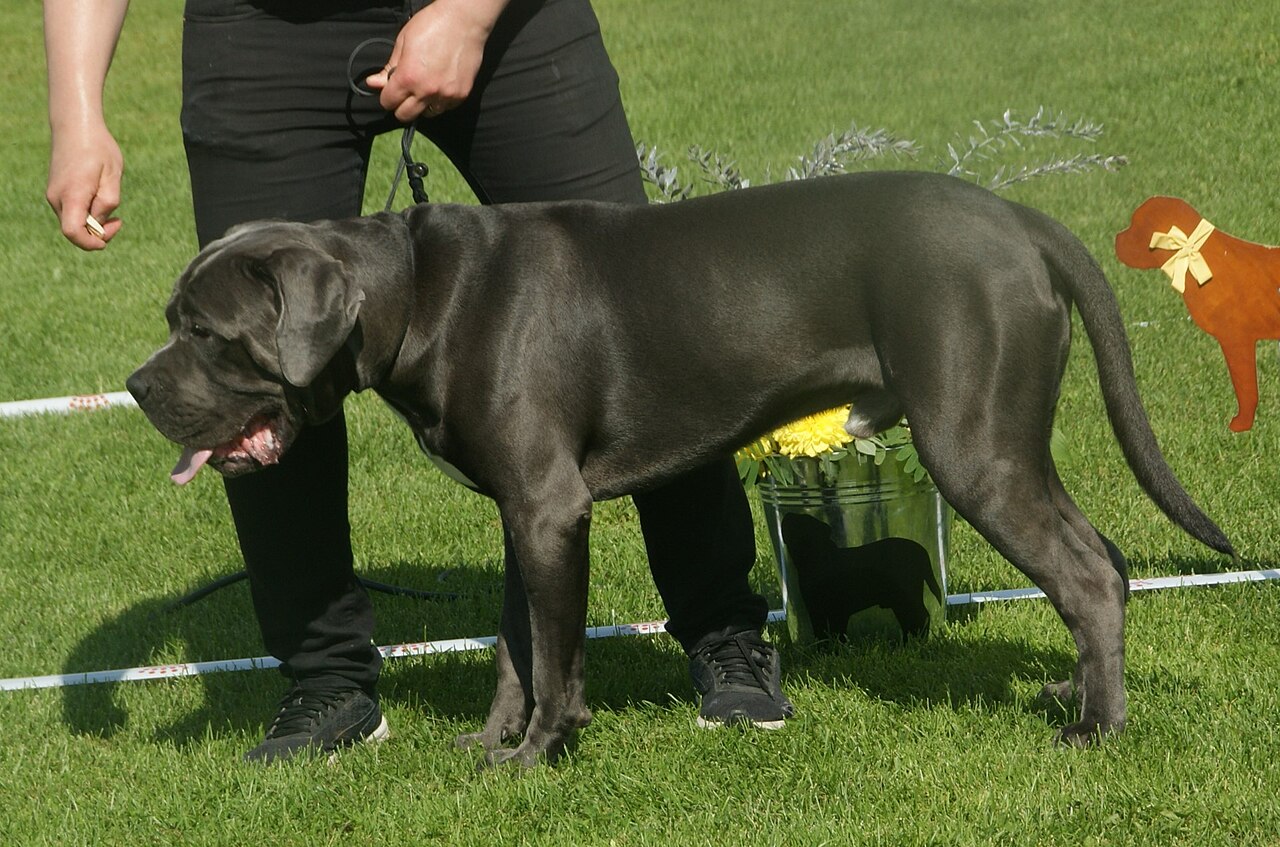

The Cane Corso is a Roman bodyguard dog experiencing a popularity boom that the breed community views with open dread — this is a genuinely serious guardian breed being bought by people who wanted an intimidating Instagram dog. With its family, a well-bred Corso is calm, watchful, and surprisingly cuddly; with strangers, it is naturally suspicious in a way that never fully socializes away. The name roughly translates from Latin as 'bodyguard dog,' and they mean it.
Height
23.5-27.5 in
Weight
90-110 lbs
Lifespan
9-12 years
Coat
Short, stiff double coat
Exercise
90+ min/day
Puppy price
$1,500-$4,000
AKC popularity
#11
Best for
Experienced large-breed owners who want a serious property guardian and will commit to years of socialization, training, and management.
Trait scores
Scored 1–5 from breed-club and kennel-club standards. Individual dogs vary; a lazy Malinois exists somewhere.
Living with a Cane Corso
Summarized from public owner discussions — breed subreddits, owner forums, and long-term owner write-ups.
What owners like
- +Unmatched natural guarding instinct — a Corso patrols and protects its home with calm seriousness, no training required
- +Devoted and gentle with its own family; owners describe 100 lb dogs that flop into laps and follow them like shadows
- +Smart and handler-focused — they're notably more trainable and biddable than most mastiff breeds
- +Quiet and composed indoors when properly exercised; they're watchers, not pacers or barkers
- +Low-maintenance short coat that needs little beyond weekly brushing
- +More athletic than other mastiffs — a fit Corso can hike, jog, and do real protection sports
Common complaints
- −Stranger suspicion is genetic and permanent — guests, delivery drivers, and visiting kids' friends all require active management for the dog's entire life
- −Dog aggression, especially same-sex, is common and often emerges at maturity (2-3 years) even in dogs that were social as puppies
- −The popularity explosion has flooded the market with badly bred Corsos with unstable temperaments — cheap puppies here are genuinely dangerous
- −This is not a first-dog breed under any circumstances; a poorly trained 110 lb guardian is a lawsuit and a euthanasia case waiting to happen
- −Insurance blacklists, breed bans, and landlords will complicate your housing options for a decade
- −Eyelid surgeries (entropion), bloat risk, and hip dysplasia make good breeder health testing non-negotiable
Conditions the breed is prone to
Not a diagnosis list — these are the problems that show up often enough that responsible breeders screen for them. Ask to see the test results.
The Cane Corso against its usual rivals
What people ask about the Cane Corso
Is a Cane Corso a good family dog?+
With its own family, including kids it was raised with, a well-bred Corso is typically devoted and gentle. The complication is everyone else: playdates, sleepovers, and holiday gatherings all involve a guardian breed making judgment calls about strangers. Families that thrive with Corsos treat management and training as a lifestyle, not a phase.
Cane Corso vs Rottweiler — which is the better guardian?+
Both are capable, but they're different animals: the Rottweiler is generally more social, more forgiving, and easier to integrate into a normal suburban life. The Corso is more suspicious of strangers, more territorial, and less interested in anyone outside its family. First-time guardian-breed owners should pick the Rottweiler almost every time.
How much training does a Cane Corso need?+
Ongoing, structured training from 8 weeks old through adulthood — not a puppy class and done. The critical work is socialization before 16 weeks and maintaining neutrality through the adolescent testing phase, when many Corsos start challenging rules. Most successful owners work with a trainer experienced in guardian breeds; a generic pet-store class isn't enough.
Why are Cane Corso puppies so expensive?+
Well-bred Corsos run $2,500-$4,000 because responsible breeders health-test hips, elbows, hearts, and eyes, and temperament-test their lines — all critical in a giant guardian breed. The $800 Craigslist Corso skips all of that, and with this breed, bad breeding shows up as fear-based aggression and early orthopedic breakdown. This is the last breed to bargain-shop.