Working group · Large · from Germany
Boxer
Also called: German Boxer, Deutscher Boxer
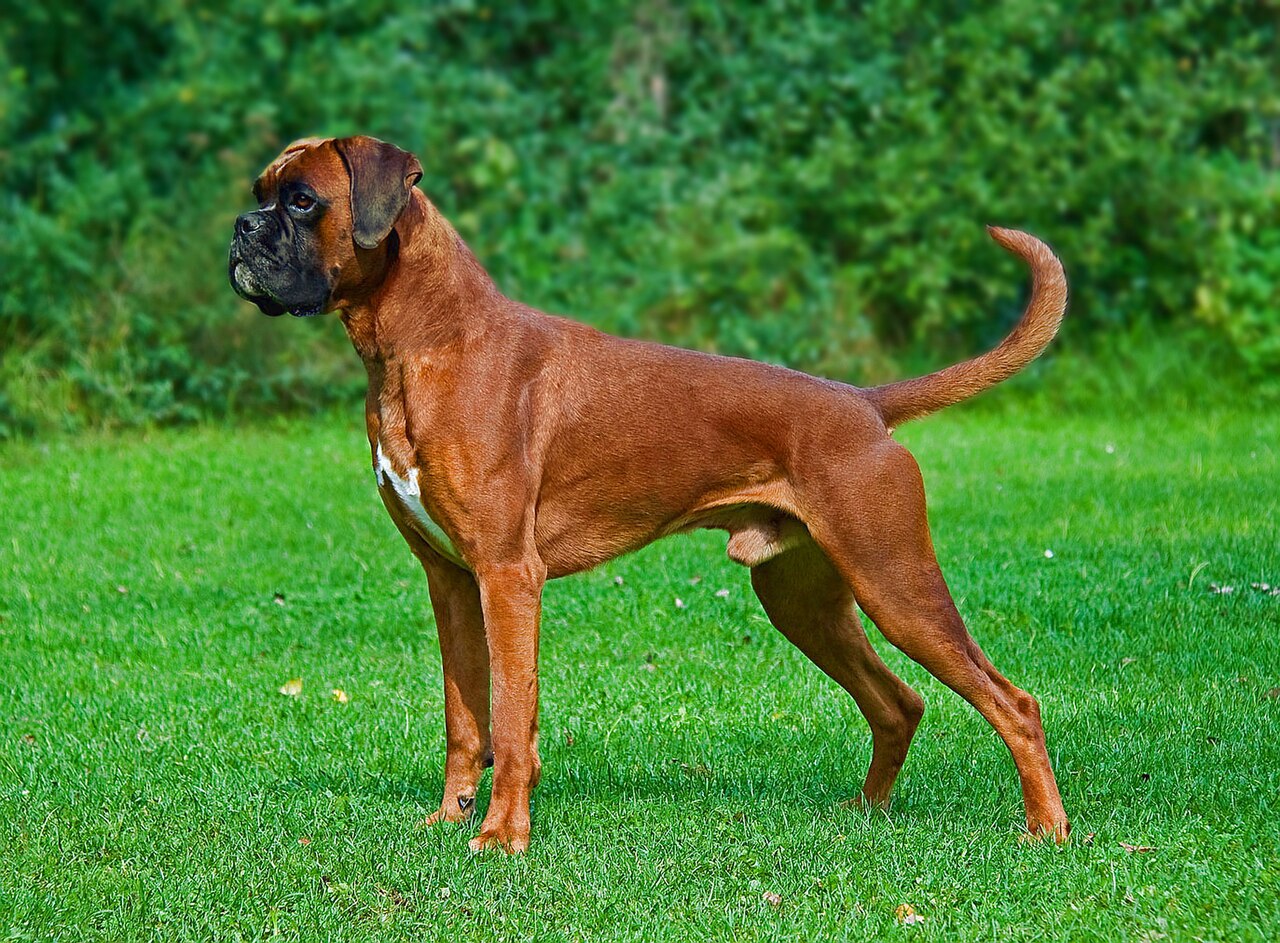

The Boxer is the class clown of the working group — a perpetual puppy that greets you with full-body wiggles, 'kidney bean' dances, and paws thrown like its namesake. They're famously wonderful with children and stay ridiculous well into old age. The trade-off is one of the worst cancer rates in dogdom and a face that can't handle heat.
Height
21.5-25 in
Weight
50-80 lbs
Lifespan
10-12 years
Coat
Short, smooth single coat
Exercise
90+ min/day
Puppy price
$1,200-$2,500
AKC popularity
#18
Best for
Playful, active families who want a goofy, kid-loving clown with a protective streak and can live with the drool, gas, and cancer risk.
Trait scores
Scored 1–5 from breed-club and kennel-club standards. Individual dogs vary; a lazy Malinois exists somewhere.
Living with a Boxer
Summarized from public owner discussions — breed subreddits, owner forums, and long-term owner write-ups.
What owners like
- +Arguably the best big-dog breed with kids — patient, playful, sturdy, and genuinely delighted by child chaos
- +The 'kidney bean' wiggle, snorts, and clownish personality provide daily free entertainment for their whole life
- +Naturally protective and alert without being a liability — Boxers historically worked as guard and police dogs
- +Short coat with minimal grooming needs and relatively light shedding for a big dog
Common complaints
- −Cancer is the breed's curse — Boxers have among the highest tumor rates of any breed, and mast cell lumps are a when-not-if for many owners
- −Brachycephalic face means real heat intolerance: summer walks move to dawn, and hot-car or heavy-exercise mistakes can be fatal
- −The drool and gas are not exaggerated — a Boxer after dinner can clear a room
- −Boxer cardiomyopathy (ARVC) can cause sudden death in seemingly healthy dogs; ask breeders for Holter results
- −That joyful jumping and paw-boxing takes years to train out, and a 70 lb dog boxing your grandmother is a real problem
- −White Boxers (about 1 in 4) carry higher deafness rates, and snoring is a lifestyle you're agreeing to regardless of color
Conditions the breed is prone to
Not a diagnosis list — these are the problems that show up often enough that responsible breeders screen for them. Ask to see the test results.
What people ask about the Boxer
Are Boxers good with kids?+
They're one of the best large breeds for kids, full stop — patient, playful, and protective without being sharp. The AKC rates them a 5 with young children, and generations of families back it up. The main issue is exuberance: a young Boxer's greeting can flatten a preschooler, so 'four on the floor' training matters early.
Why do Boxers have such short lifespans?+
Cancer, mostly — mast cell tumors, lymphoma, and brain tumors hit Boxers harder than nearly any breed, and heart conditions like ARVC add sudden-death risk. Averages land around 10-12 years, with many lost at 8-9. Health-tested lines, lump checks at every vet visit, and keeping them lean are your best levers.
Can Boxers handle hot weather?+
Poorly. Their shortened muzzle limits panting efficiency, so heat plus humidity plus exercise is a genuinely dangerous combination. In summer, owners shift exercise to early morning and evening, and many keep sessions short even then. If you live somewhere hot without AC, this is a real strike against the breed.
Are Boxers easy to train?+
Smart, but with a comedian's attention span. They learn fast when training is upbeat, short, and treat-heavy, and they shut down under harsh or repetitive drilling — bored Boxers invent their own games mid-session. The bigger project is impulse control: teaching a bouncy, powerful adolescent not to jump, mouth, and body-slam takes consistent work into year two or three.