Non-Sporting group · Small · from Canary Islands / France
Bichon Frise
Also called: Bichon, Tenerife Dog
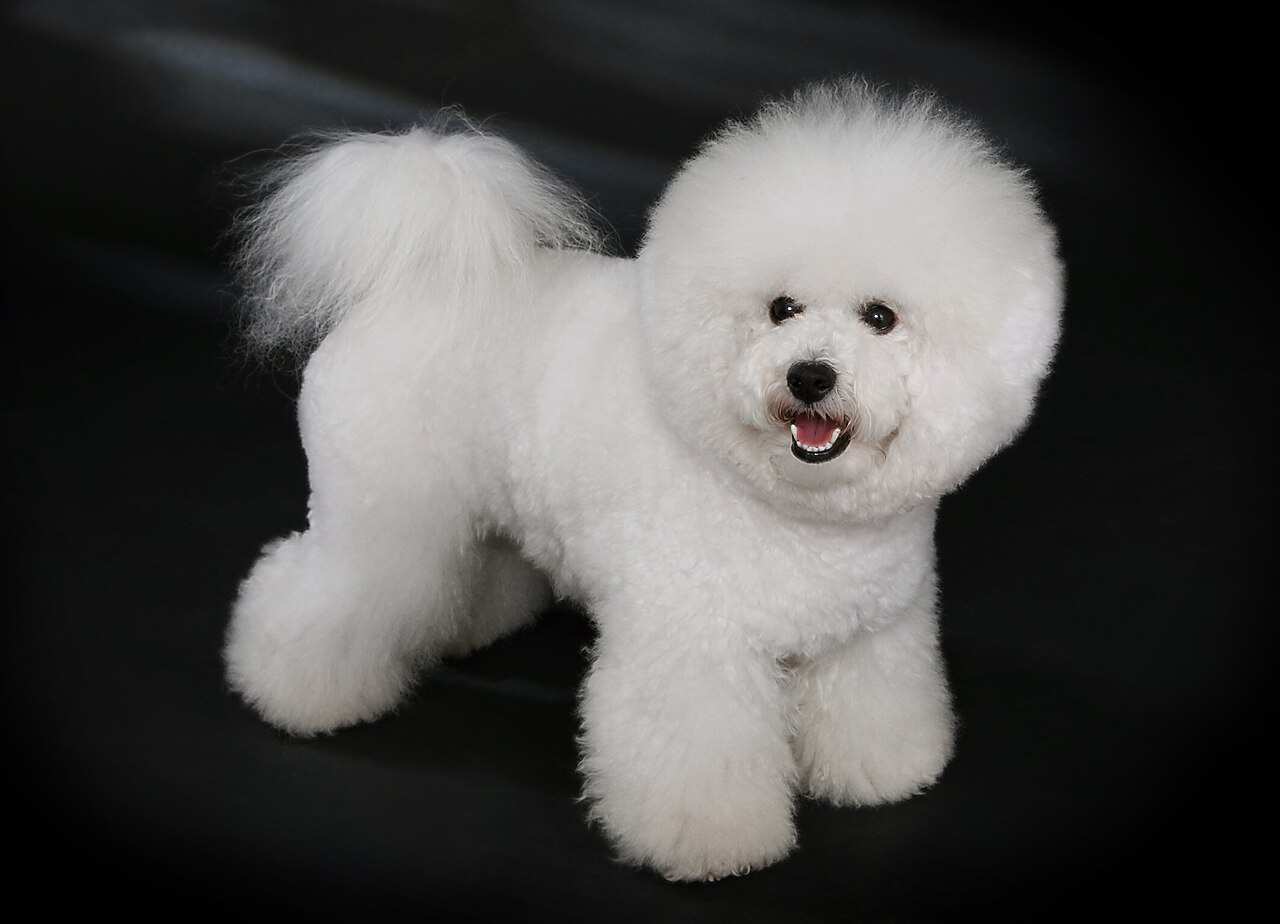

The Bichon Frise is the happiest dog in most rooms it enters: a curly white charmer bred to be everyone's friend, sturdy enough for kids and merry enough for retirees. The honest headline is the coat — that powder-puff look is a monthly professional grooming bill and real between-visit brushing, forever.
Height
9.5-11.5 in
Weight
12-18 lbs
Lifespan
14-15 years
Coat
Curly, plush double coat; low-shedding
Exercise
30+ min/day
Puppy price
$1,500-$3,000
AKC popularity
#49
Best for
Families and first-timers who want a cheerful, sturdy, low-shedding small dog and are honest about paying a groomer every month for the rest of its long life.
Trait scores
Scored 1–5 from breed-club and kennel-club standards. Individual dogs vary; a lazy Malinois exists somewhere.
Living with a Bichon Frise
Summarized from public owner discussions — breed subreddits, owner forums, and long-term owner write-ups.
What owners like
- +Relentlessly cheerful temperament — Bichons like everyone: kids, dogs, cats, strangers, your mail carrier
- +Low-shedding curly coat makes them a top pick for allergy-prone households
- +Sturdier than toy breeds at 12-18 pounds — a small white fluffy dog that can actually handle family life
- +Genuinely trainable and eager to work for attention; they were literal circus dogs for centuries
- +Long-lived, with 14-15 years the norm and plenty reaching beyond
Common complaints
- −The coat mats fast without brushing every other day, and professional grooming every 4-6 weeks at $70-$120 a visit is effectively mandatory
- −House-training is famously slow — Bichons routinely take 6-12 months to be reliable
- −Bred for constant companionship, so separation anxiety and lonely barking are common in work-away households
- −Skin allergies are the breed's biggest medical headache and can mean special diets and dermatology bills
Conditions the breed is prone to
Not a diagnosis list — these are the problems that show up often enough that responsible breeders screen for them. Ask to see the test results.
The Bichon Frise against its usual rivals
What people ask about the Bichon Frise
Are Bichon Frises hypoallergenic?+
They're one of the closest things to it — the curly double coat traps shed hair and dander instead of releasing it into your house. No dog is 100% hypoallergenic since allergies are triggered by dander and saliva, so spend time with a Bichon before committing. Regular grooming keeps allergen levels down.
How much does Bichon grooming really cost?+
Plan on $70-$120 every 4-6 weeks for a professional groom, which is $800-$1,400 a year for the life of the dog, plus brushing at home several times a week to prevent mats between visits. Some owners learn to clip at home, but the coat is genuinely technical. If that budget makes you wince, pick a smooth-coated breed.
Why is my Bichon so hard to potty train?+
Breed-wide trait — small companion breeds top every 'hardest to house-train' list and Bichons are charter members. Small bladders, indoor-living heritage, and subtle signals mean you need rigid scheduling, crate training, and zero unsupervised freedom for months. They all get there; the owners who struggle are the ones who declared victory at 4 months.
Are Bichons good with kids and other pets?+
One of the best small breeds for both. They're sturdy enough to enjoy (supervised) kid play rather than merely survive it, and their social, non-territorial nature makes multi-pet households easy. Just teach kids that even a sturdy small dog isn't a toy, and give the dog a retreat space.