Non-Sporting group · Small · from United States
Boston Terrier
Also called: Boston Bull, American Gentleman
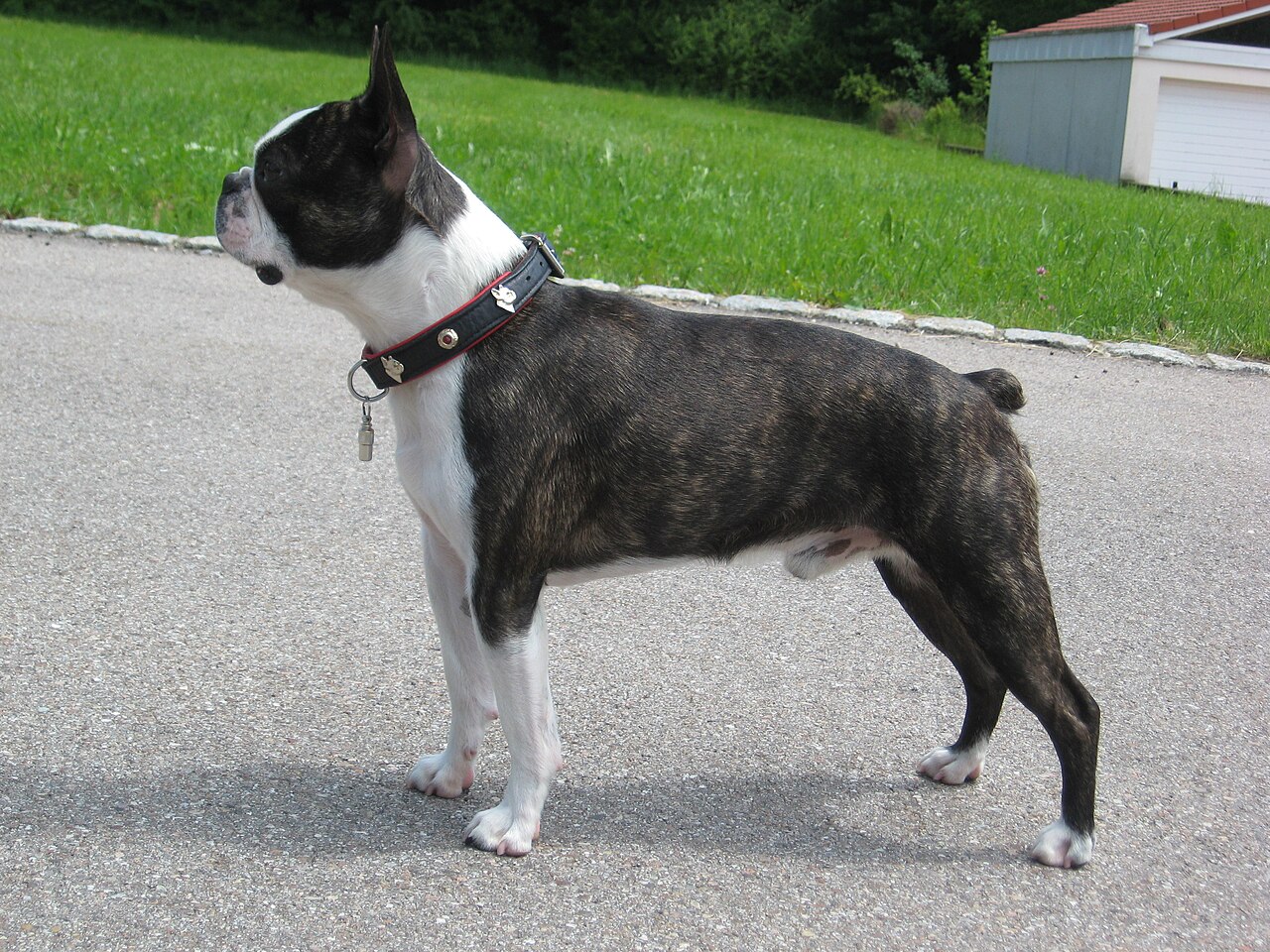

The Boston Terrier — the 'American Gentleman' in his tuxedo coat — is one of the easiest-to-live-with small dogs in the AKC lineup: friendly, funny, eager to please, and genuinely good with everyone. Experienced owners' honest take: a healthier, more athletic, more trainable alternative to the French Bulldog, but still a flat-faced breed with the heat and eye issues that come with it.
Height
15-17 in
Weight
12-25 lbs
Lifespan
11-13 years
Coat
Short, smooth, fine coat
Exercise
60+ min/day
Puppy price
$1,000-$2,500
AKC popularity
#23
Best for
First-time owners and families who want a playful, trainable, apartment-sized dog with more athleticism and fewer health landmines than a Frenchie.
Trait scores
Scored 1–5 from breed-club and kennel-club standards. Individual dogs vary; a lazy Malinois exists somewhere.
Living with a Boston Terrier
Summarized from public owner discussions — breed subreddits, owner forums, and long-term owner write-ups.
What owners like
- +Playful and surprisingly athletic — Bostons fetch, hike, and do agility in ways most Frenchies can't
- +Quiet for a small dog; alert barking exists but the yappiness of terriers and toys mostly doesn't
- +Excellent with kids, dogs, cats, and strangers — sociability is the breed's whole brand
- +Minimal grooming: a weekly rubber-curry session and you're done, with only light shedding
- +Cheaper to buy and generally cheaper to insure than a French Bulldog while scratching the same itch
Common complaints
- −Still brachycephalic: snoring, snorting, heat sensitivity, and exercise limits on hot days are part of the deal
- −Those big prominent eyes are injury magnets — corneal ulcers are one of the most common Boston vet visits
- −More energy than people expect from the tuxedo photos — an under-exercised Boston is a bouncy, mouthy gremlin
- −Prone to allergies and sensitive stomachs; many owners cycle through foods to find one that works
Conditions the breed is prone to
Not a diagnosis list — these are the problems that show up often enough that responsible breeders screen for them. Ask to see the test results.
The Boston Terrier against its usual rivals
What people ask about the Boston Terrier
Boston Terrier vs French Bulldog — which should I get?+
Get the Boston if you want a dog that can actually exercise with you, trains more easily, costs half as much, and has meaningfully fewer airway and spine problems. Get the Frenchie if you want a calmer, lower-exercise couch potato and accept the health tradeoffs. Owners of both usually describe the Boston as 'a Frenchie that can run.'
Are Boston Terriers good apartment dogs?+
Excellent ones — they're small, quiet, and people-oriented, and they were basically city dogs from the start (bred in Boston, obviously). The one caveat is energy: they need a real daily walk plus play, not just a potty trip, or they'll invent their own entertainment indoors.
How much heat can a Boston Terrier handle?+
Less than a normal-nosed dog but more than most Frenchies. On hot, humid days keep exercise to early morning and evening, watch for loud raspy breathing, and never leave them in a car. Most Boston owners in warm climates manage fine with common sense; it's a limitation, not a dealbreaker.
Do Boston Terriers have health problems?+
They're one of the healthier flat-faced breeds, but not problem-free: eye injuries and corneal ulcers are common, patellar luxation shows up, some are born deaf in one ear (ask for BAER testing), and allergies are frequent. A good breeder tests eyes, patellas, and hearing — an 11-13 year healthy lifespan is a realistic expectation.