Working group · Medium · from Siberia
Samoyed
Also called: Sammy, Sammie, Smiling Sammie
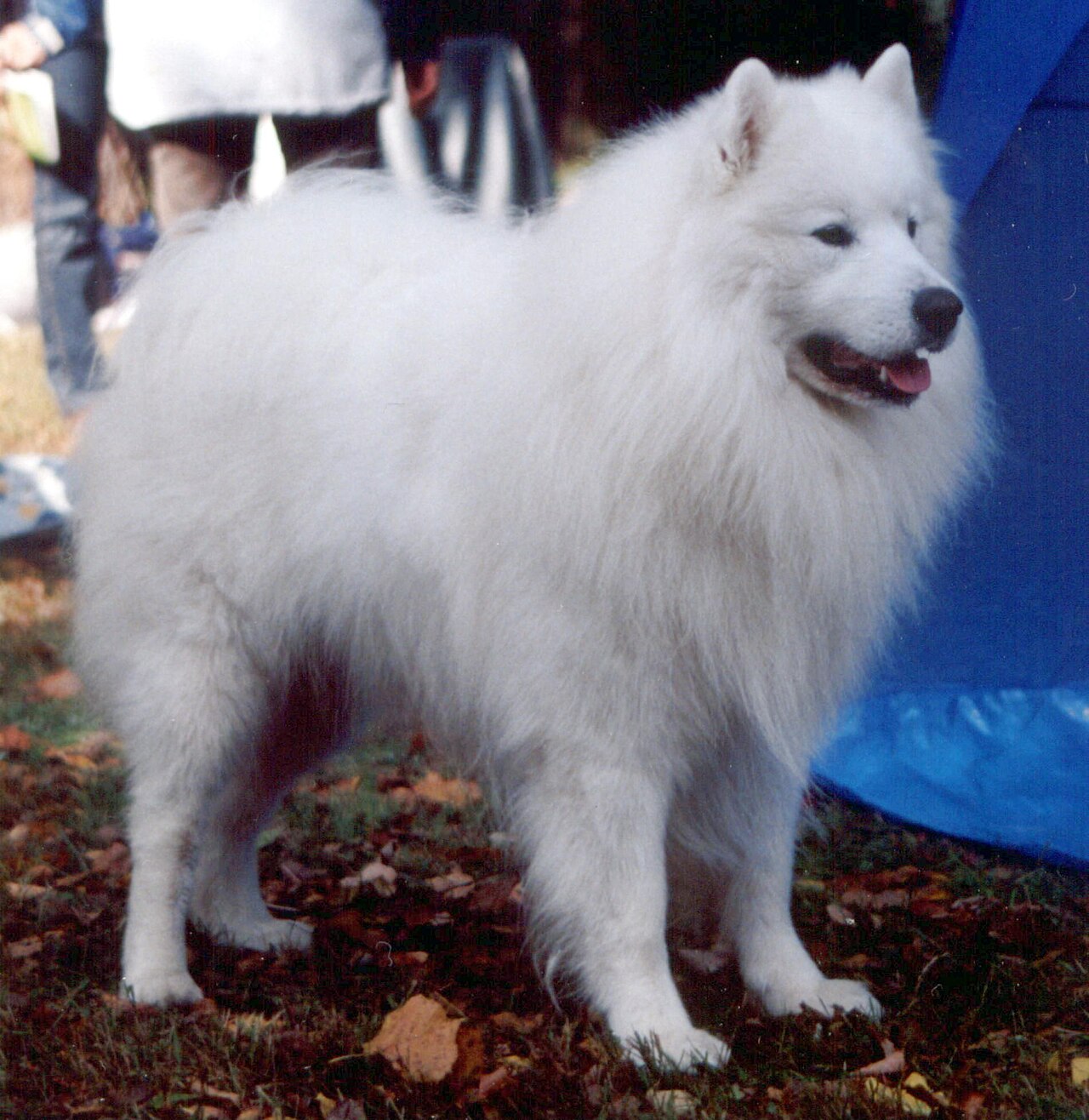

The Samoyed is the smiling cloud: a dazzling white Siberian sled dog whose upturned mouth (the famous 'Sammy smile') evolved to prevent drooling icicles. They're among the friendliest, most people-obsessed breeds alive — bred to sleep inside the tent with their humans for warmth. The bill for all that charm comes due in fur, noise, and a dog that considers your absence a personal betrayal.
Height
19-23.5 in
Weight
35-65 lbs
Lifespan
12-14 years
Coat
Profuse white double coat
Exercise
90+ min/day
Puppy price
$2,000-$3,500
AKC popularity
#55
Best for
Social, active households who want a stunning, people-loving spitz and will genuinely commit to the grooming, the noise, and being the center of a needy dog's universe.
Trait scores
Scored 1–5 from breed-club and kennel-club standards. Individual dogs vary; a lazy Malinois exists somewhere.
Living with a Samoyed
Summarized from public owner discussions — breed subreddits, owner forums, and long-term owner write-ups.
What owners like
- +The 'Sammy smile' comes attached to a genuinely joyful, friendly temperament — they adore people, kids included, and strangers are just future friends
- +Deeply people-bonded from millennia of living inside the tent with Siberian herders; they want in on everything you do
- +More trainable and handler-focused than huskies or malamutes, especially with fun, food-driven sessions
- +Cold-weather adventure dog par excellence: sledding, skijoring, and winter hikes are their genetic happy place
Common complaints
- −The talking never stops: Samoyeds bark, woo, howl, and editorialize at a 5/5 AKC-rated volume — quiet apartments and thin walls need not apply
- −Grooming is a lifestyle: thorough line-brushing weekly at minimum, near-daily during coat blows, or the undercoat felts into mats
- −Velcro neediness shades into real separation anxiety; a lonely Sammy is a loud, destructive, miserable Sammy
- −White fur on literally everything you own, twice a year in blizzard quantities and steadily year-round
- −Working-spitz energy means 90 minutes of real activity daily — a bored Samoyed digs, chews, and screams
- −Samoyed hereditary glomerulopathy (a genetic kidney disease) and PRA mean DNA-tested parents are non-negotiable when buying
Conditions the breed is prone to
Not a diagnosis list — these are the problems that show up often enough that responsible breeders screen for them. Ask to see the test results.
The Samoyed against its usual rivals
What people ask about the Samoyed
Are Samoyeds hypoallergenic?+
No — this is a persistent myth. Samoyeds produce less of some allergens and their coat traps dander, so some allergy sufferers report doing better with them, but they are emphatically not allergen-free, and they shed enormously. If allergies are the concern, spend real time around adult Samoyeds before committing rather than trusting the label.
How much grooming does a Samoyed actually need?+
A serious weekly line-brushing session (an hour, down to the skin, not just the surface) at minimum, escalating to near-daily during the twice-yearly coat blow. Baths are an event — that coat takes hours to properly dry. Many owners use professional groomers at $100+ per visit. Never shave them; the coat insulates against heat and sun as well as cold.
Are Samoyeds loud?+
Famously. The AKC rates their barking 5/5, and owners confirm: they bark at arrivals, departures, squirrels, and joy itself, plus the signature 'woo-woo' conversations. Some individuals are quieter, and training helps with alert barking, but a noise-sensitive household or shared-wall apartment is a genuinely bad match.
Samoyed vs Husky — what's the difference for an owner?+
The Samoyed is more people-focused, more trainable, and more velcro — bred to live with its family, not just pull for it. Huskies are more independent, more escape-prone, and generally lower-maintenance on grooming. The Sammy costs more upfront ($2,000-$3,500), needs far more brushing, and wants far more of your attention. Pick based on how much dog-neediness you actually enjoy.