Hound group · Small · from England
Beagle
Also called: English Beagle
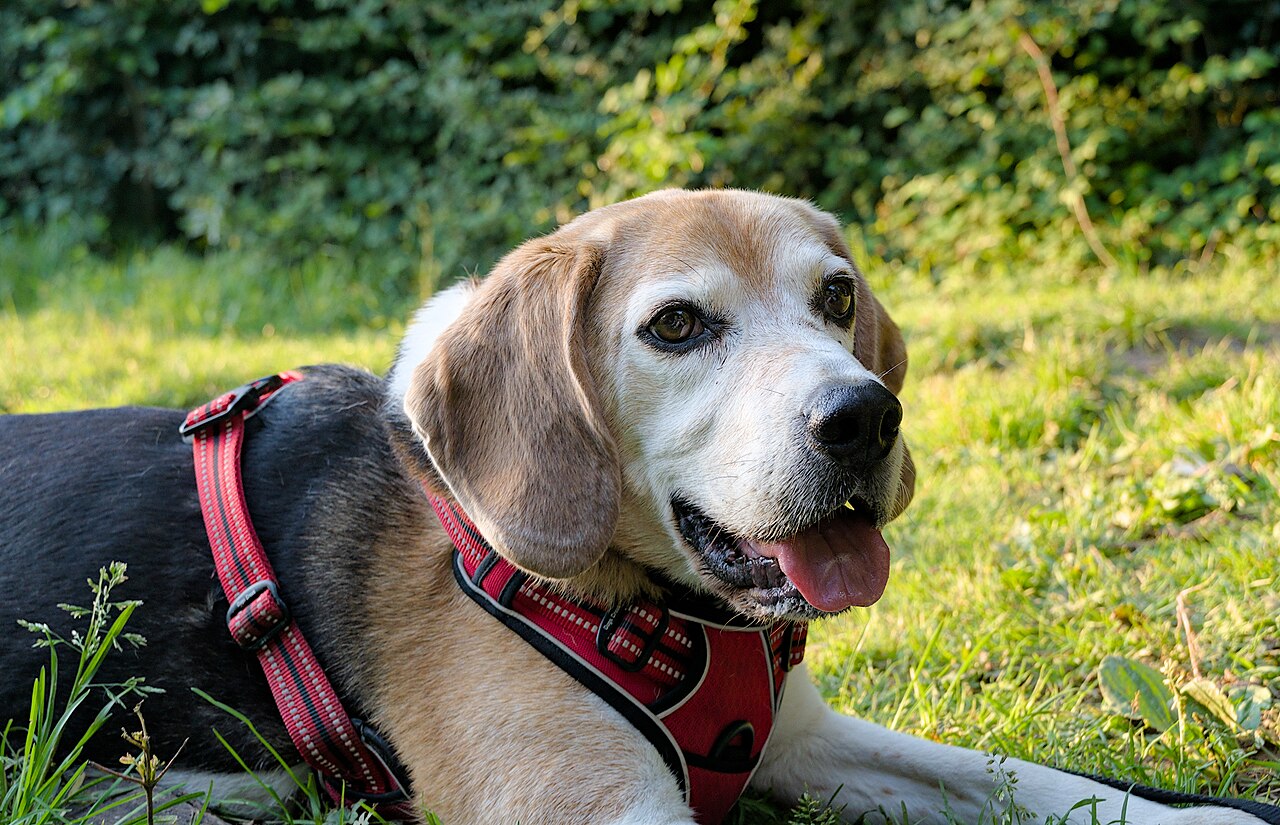

The Beagle is a compact English scent hound bred to trail rabbits in packs, which explains everything about living with one: the merriness, the dog-friendliness, the food obsession, and the total deafness that descends when a smell appears. The honest headline: one of the best family dogs going, as long as you accept you're negotiating with a nose, not commanding a dog.
Height
13-15 in
Weight
20-30 lbs
Lifespan
10-15 years
Coat
Short, dense double coat
Exercise
75+ min/day
Puppy price
$800-$1,500
AKC popularity
#7
Best for
Families who want a sturdy, cheerful, kid-proof companion and can accept that the nose runs the show and the neighbors will hear about it.
Trait scores
Scored 1–5 from breed-club and kennel-club standards. Individual dogs vary; a lazy Malinois exists somewhere.
Living with a Beagle
Summarized from public owner discussions — breed subreddits, owner forums, and long-term owner write-ups.
What owners like
- +Merry, resilient, kid-proof temperament — Beagles cheerfully absorb family chaos that would rattle other breeds
- +Bred to work in packs, so they're reliably excellent with other dogs and usually fine with cats
- +Perfect medium-small size: sturdy enough for rough play, portable enough for the car and the couch
- +Five-minute grooming and a wash-and-wear coat
- +Food motivation makes training sessions easy to fuel — a Beagle will do anything for a treat
- +Generally healthy and long-lived — 12-15 years is a reasonable expectation
Common complaints
- −The nose overrides everything: off-leash reliability is basically a myth, because a hot scent trail deletes their hearing
- −The bay is loud, distinctive, and carries three houses down — lonely or bored Beagles will perform it for hours
- −Escape artists that dig under and squeeze through fences when a rabbit advertises next door
- −That appetite makes obesity the breed's most common health problem, and chubby Beagles are everywhere
Conditions the breed is prone to
Not a diagnosis list — these are the problems that show up often enough that responsible breeders screen for them. Ask to see the test results.
The Beagle against its usual rivals
What people ask about the Beagle
Do Beagles bark and howl a lot?+
They can, and the Beagle bay is in a different acoustic category from normal barking — a rolling 'aroooo' that was designed to be heard across fields. Content, exercised Beagles with company are reasonably quiet; bored or lonely ones will serenade the block. If you have close neighbors and long workdays, this is the single biggest thing to plan around.
Can a Beagle ever be off leash?+
Assume no. Beagles were bred for 500 years to lock onto a scent and follow it for miles, ignoring the humans yelling behind them — it's not disobedience, it's the job description. Fenced yards (with dig-proofing), long lines, and GPS collars are the honest tools. The Beagle rescues' lost-dog boards are full of 'he'd never run off before.'
Are Beagles hard to train?+
They're not dumb — they're independent contractors. A Beagle learns fast when treats flow and sees no reason to comply when they don't, so trainers rate them 'stubborn' while owners with a treat pouch do fine. House-training is often slow, recall is never trustworthy, and scent games are where they'll dazzle you. Work with the nose, not against it.
Are Beagles good apartment dogs?+
Size-wise, absolutely; the risks are noise and loneliness. A Beagle left alone all day in an apartment is the classic howling-complaint scenario, and their exercise needs (a solid hour-plus of sniffy walks) don't disappear because the square footage did. With company most of the day, real walks, and tolerant neighbors, apartment Beagles do fine.