Hound group · Small · from Germany
Dachshund
Also called: Doxie, Wiener Dog, Sausage Dog
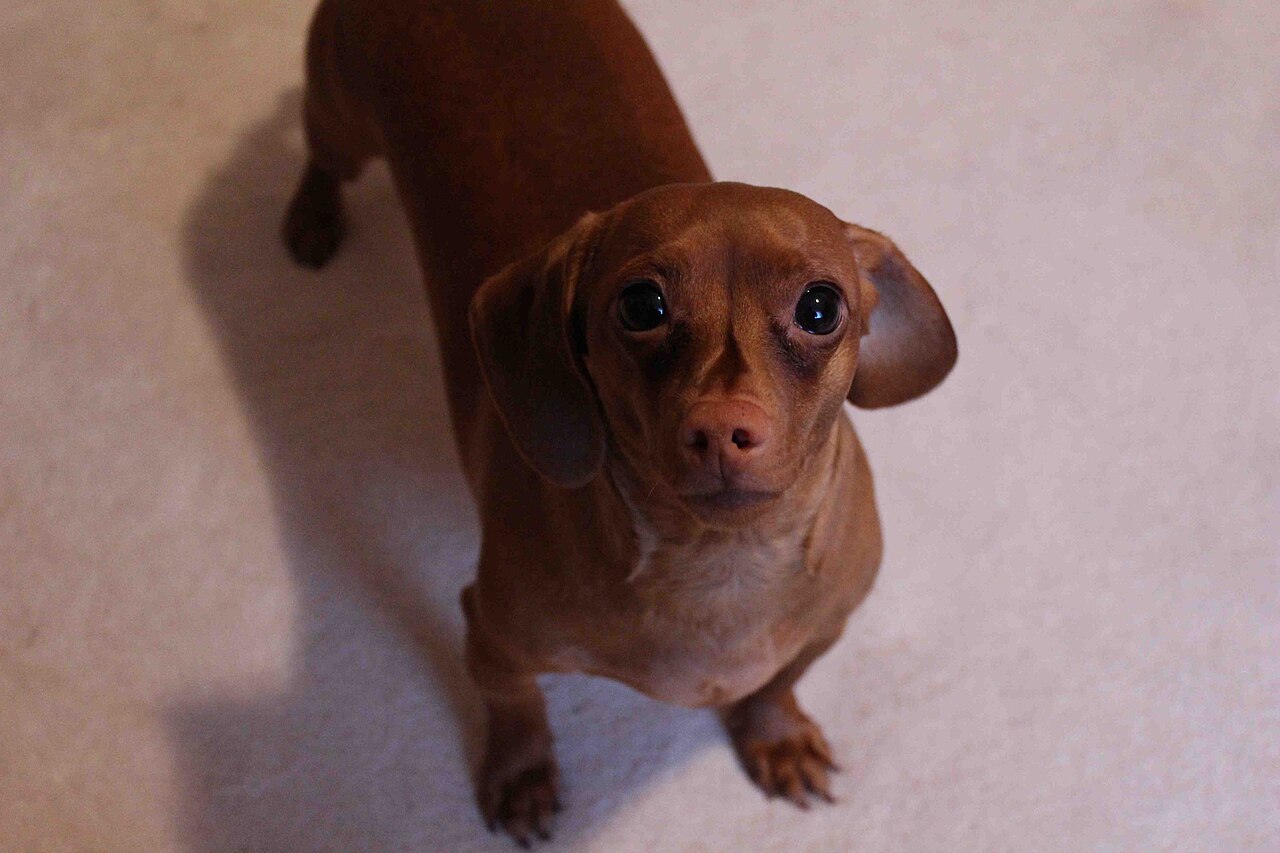

The Dachshund packs a full-sized hound's courage, voice, and stubbornness into a badger-hunting chassis, and America has made it a top-5 breed. The honest headline is the back: roughly one in four Dachshunds has an IVDD episode in its lifetime, and living with one means managing jumps, stairs, and weight from day one.
Height
5-9 in
Weight
11-32 lbs
Lifespan
12-16 years
Coat
Smooth, longhaired, or wirehaired varieties
Exercise
45+ min/day
Puppy price
$1,500-$3,500
AKC popularity
#5
Best for
Owners who want a big-personality, long-lived small hound and will take back health seriously — ramps, lean weight, and no stair marathons.
Trait scores
Scored 1–5 from breed-club and kennel-club standards. Individual dogs vary; a lazy Malinois exists somewhere.
Living with a Dachshund
Summarized from public owner discussions — breed subreddits, owner forums, and long-term owner write-ups.
What owners like
- +Comes in a build-your-own format: two sizes (standard and miniature) and three coats (smooth, long, wire)
- +Devoted burrowing companions — a Dachshund under your blanket is the breed's default state
- +Long-lived, routinely reaching 14-16 with good care
- +Apartment-compatible size with a watchdog bark that punches far above its weight
Common complaints
- −IVDD is the breed's defining risk — around 1 in 4 will have back disease, and surgery runs $5,000-$12,000; pet insurance from puppyhood is near-mandatory advice
- −That watchdog bark is loud, deep, and generously deployed; Dachshunds are one of the barkiest breeds
- −Notoriously difficult to house-train — the breed is a perennial member of every 'hardest to potty train' list
- −Stubborn badger-hunter brain: recall and obedience are negotiations with a hound that was bred to work alone underground
- −Obesity is common, catastrophic for their backs, and enabled by world-class begging
- −Prey drive and digging instincts mean flowerbeds, hamsters, and unfenced squirrels are all at risk
Conditions the breed is prone to
Not a diagnosis list — these are the problems that show up often enough that responsible breeders screen for them. Ask to see the test results.
The Dachshund against its usual rivals
What people ask about the Dachshund
How worried should I be about a Dachshund's back?+
It should shape how you live with the dog: roughly 20-25% of Dachshunds experience IVDD, the highest rate of any breed. The playbook is keeping them lean, using ramps for furniture, limiting stairs and jumping, and using a harness instead of a collar. Get pet insurance while they're young and healthy — a disc surgery can cost more than the car you drove to the vet.
Are Dachshunds hard to train?+
They're smart but bred for independent underground work, so they ask 'what's in it for me' about everything — and house-training in particular is famously slow, often taking most of the first year. Food motivation is your lever; harsh corrections just entrench the stubbornness. Expect a sassy negotiator, not a shutdown, and you'll do fine.
Standard or miniature, and which coat?+
Miniatures (11 lbs and under) suit laps and apartments; standards (16-32 lbs) are surprisingly substantial, tough little hounds. Coat changes temperament slightly by reputation: smooths are the classic one-person dogs, longhairs a bit softer and calmer, wirehairs the terrier-spiced clowns. All three share the back risks and the bark.
Are Dachshunds good with kids?+
With respectful kids who won't pick them up wrong, yes — they're playful, sturdy-for-size, and devoted. The two dangers run both directions: rough handling can literally injure a Dachshund's back, and a startled or possessive Doxie is quicker to snap than most family breeds. Supervision plus teaching kids proper handling makes it work.