Working group · Giant · from England
English Mastiff
Also called: Mastiff, Old English Mastiff
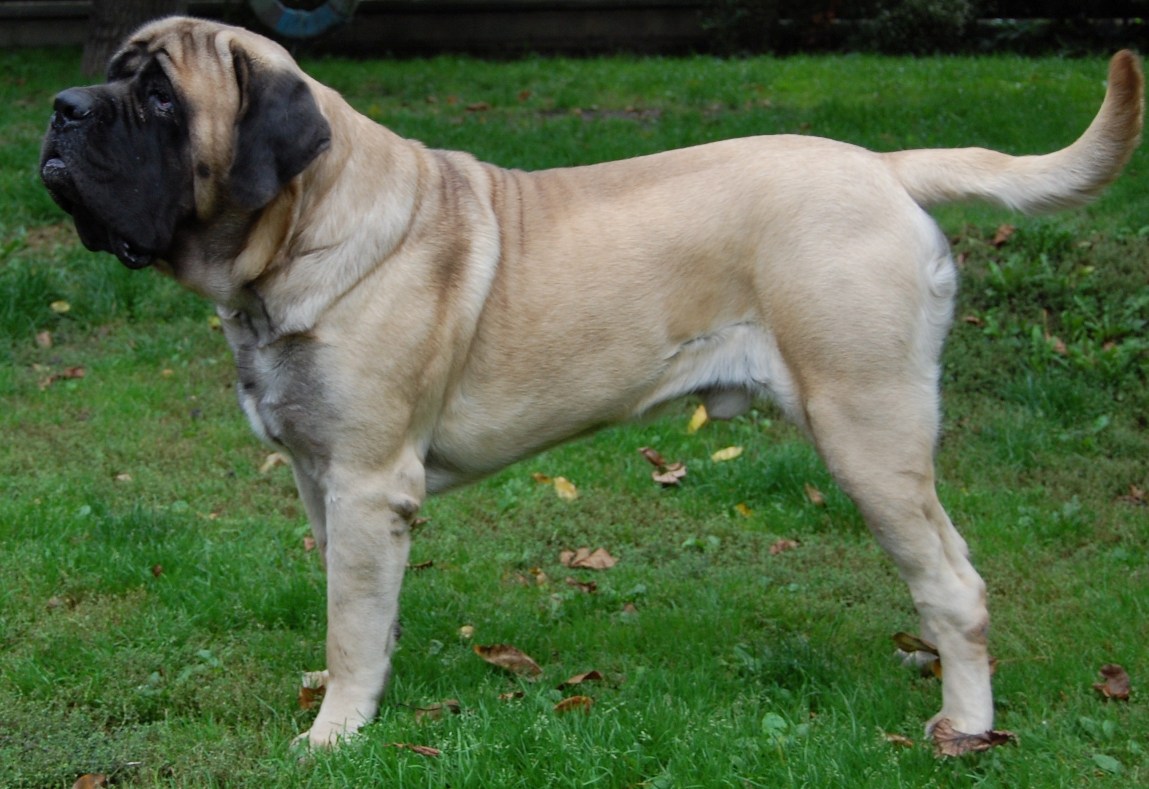

The English Mastiff is the heaviest dog breed on earth — males routinely top 200 lbs — wrapped around one of the gentlest temperaments in dogdom. These are dignified, quiet homebodies whose guarding style is standing in a doorway and simply existing. Every conversation about the breed comes back to two things: the slobber, which is biblical, and the lifespan, which is cruelly short.
Height
27.5-30+ in
Weight
120-230 lbs
Lifespan
6-10 years
Coat
Short, straight double coat
Exercise
45+ min/day
Puppy price
$1,500-$3,500
AKC popularity
#40
Best for
Calm households that want a devoted, low-energy colossus and can genuinely live with slobber on the ceiling and a dog they cannot physically move.
Trait scores
Scored 1–5 from breed-club and kennel-club standards. Individual dogs vary; a lazy Malinois exists somewhere.
Living with a English Mastiff
Summarized from public owner discussions — breed subreddits, owner forums, and long-term owner write-ups.
What owners like
- +Astonishingly gentle for their size — Mastiffs are famous 'nanny' dogs, patient and careful with children they know
- +Low exercise needs: a couple of moderate walks and they're delighted to spend the rest of the day as furniture
- +Quiet almost to a fault — many owners hear their Mastiff truly bark a handful of times a year
- +Guarding by sheer presence; a Mastiff doesn't need to act, its silhouette in the window does the job
Common complaints
- −The drool is unlike anything else — after water, meals, or head-shakes it hits walls, ceilings, and guests; drool towels get stationed in every room
- −Lifespan of 6-10 years is among the shortest of any breed, and the giant-breed health bills come anyway
- −You cannot move a 200 lb dog that doesn't want to move — a Mastiff that won't get in the car or into the vet has veto power
- −Anesthesia, surgeries, meds, and even nail trims cost more and carry more risk at this size; not all vets are set up for them
- −Sensitive to harsh handling despite their size — heavy-handed training creates a stubborn or fearful giant, the worst combination
- −Heat intolerance, snoring, gas, and the physical destruction of enthusiastically wagged tails are all part of the package
Conditions the breed is prone to
Not a diagnosis list — these are the problems that show up often enough that responsible breeders screen for them. Ask to see the test results.
The English Mastiff against its usual rivals
What people ask about the English Mastiff
How big do English Mastiffs actually get?+
Males typically run 160-230 lbs and stand 30+ inches; the record-holder, Zorba, weighed over 340 lbs. Even 'small' females outweigh most adult humans' large dogs. This size affects everything: which car you drive, whether you can lift them when they're old or injured, and what your vet is equipped to handle. People underestimate this until year one is over.
Are Mastiffs lazy? How much exercise do they need?+
They're the lowest-exercise giant breed — 30-45 minutes of walking daily keeps an adult healthy and content, and forced running is actually bad for their joints. Puppies especially must not be over-exercised while growing. Don't confuse low energy with no needs though: they still need training, socialization, and daily engagement or they become anxious doorstops.
Is the Mastiff drool really that bad?+
Yes, and everyone who says they were prepared admits they weren't. Loose jowls mean slobber strings after every drink, meal, and excited moment, launched onto walls and ceilings by head-shakes. Owners keep towels in every room and accept slime as decor. If drool disgusts you, this is genuinely a dealbreaker breed — get a Great Dane instead.
Are English Mastiffs good guard dogs?+
They're deterrents more than attack dogs — historically bred to guard estates, their instinct is to place themselves between family and threat and let 200 lbs make the argument. Most are gentle with invited guests and reserved rather than aggressive with strangers. That said, socialization matters enormously, because a fearful giant is dangerous in a way a fearful Beagle is not.