Working group · Giant · from Switzerland
Saint Bernard
Also called: St. Bernard, Saint
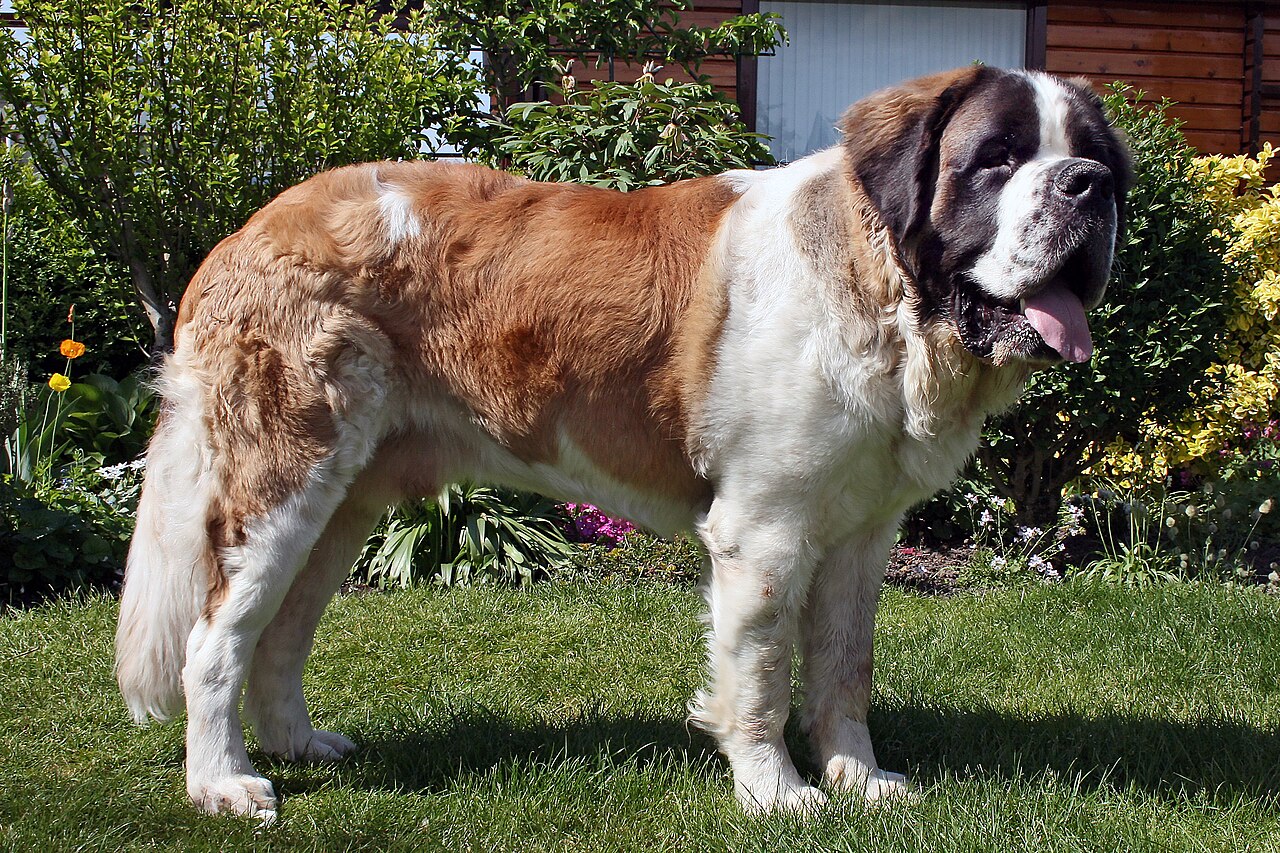

The Saint Bernard is the Beethoven dog: a 150 lb Alpine rescue legend that now specializes in rescuing couch cushions and leaning its full weight on anyone who sits down. They're playful, charming, and wonderful with kids, with lower exercise needs than their size suggests. The barrel of brandy is a myth; the drool, tragically, is not.
Height
26-30 in
Weight
120-180 lbs
Lifespan
8-10 years
Coat
Dense double coat, short or long-haired varieties
Exercise
60+ min/day
Puppy price
$1,500-$3,000
AKC popularity
#63
Best for
Families in cooler climates who want a patient, comical giant with modest exercise needs and have made genuine peace with drool and fur on everything.
Trait scores
Scored 1–5 from breed-club and kennel-club standards. Individual dogs vary; a lazy Malinois exists somewhere.
Living with a Saint Bernard
Summarized from public owner discussions — breed subreddits, owner forums, and long-term owner write-ups.
What owners like
- +Exceptional with children — patient, tolerant, and gentle, with the classic nanny-dog instinct to supervise the smallest family members
- +Modest exercise needs for such a huge dog; a daily walk and some play genuinely covers it
- +Charming, comedic personality — Saints are goofier and more playful than most giants, well into adulthood
- +Quiet in the house with a bark reserved for actual events, which at their volume is genuinely impressive
- +Cold-weather superpowers: snow transforms them into ecstatic puppies, and winter hikes are their happy place
- +Generally easygoing with other pets — low prey drive and a live-and-let-live attitude toward cats
Common complaints
- −Champion-tier drool, competing only with Mastiffs — every drink, meal, and warm day produces slingers on walls and clothing
- −Sheds heavily year-round with two massive seasonal blows, and the long-haired variety mats without regular brushing
- −Heat intolerance is serious — these are Alpine dogs, and hot-humid summers require AC and dawn walks, not willpower
- −8-10 year lifespan with the usual giant-breed suspects: joints, bloat, and bone cancer
Conditions the breed is prone to
Not a diagnosis list — these are the problems that show up often enough that responsible breeders screen for them. Ask to see the test results.
The Saint Bernard against its usual rivals
What people ask about the Saint Bernard
Are Saint Bernards good family dogs?+
For the right family, they're superb — gentle, patient with kids, playful without being frantic, and content with moderate exercise. The realistic caveats are space for a small pony, tolerance for drool and fur as a lifestyle, and a cool climate or good AC. Families who check those boxes tend to become lifetime Saint people.
Do Saint Bernards really drool that much?+
Yes — they're in the top tier with Mastiffs and Newfoundlands. The loose flews mean water, food, excitement, and heat all produce ropes of slobber, and a head-shake sends them flying impressively far. Owners keep towels at the door, by the couch, and in the car. 'Dry-mouth' Saints exist but are the exception, not something to count on.
How much exercise does a Saint Bernard need?+
About 45-60 minutes of moderate activity a day — brisk walks, sniffy strolls, and play sessions, not running. They're mellow by giant-dog standards and over-exercising growing puppies damages developing joints, so the first 18 months are deliberately low-impact. Adults make great hiking companions in cool weather, within reason.
Short-haired or long-haired Saint Bernard?+
Both shed enormously, so don't pick on that basis. The short-haired (smooth) coat is lower maintenance and what the original hospice dogs had; the long-haired (rough) coat is the classic Beethoven look but mats behind the ears and legs without consistent brushing. Temperament and health are identical — pick the breeder's health testing over the coat type.