Working group · Giant · from Germany
Great Dane
Also called: Apollo of Dogs, Deutsche Dogge, German Mastiff
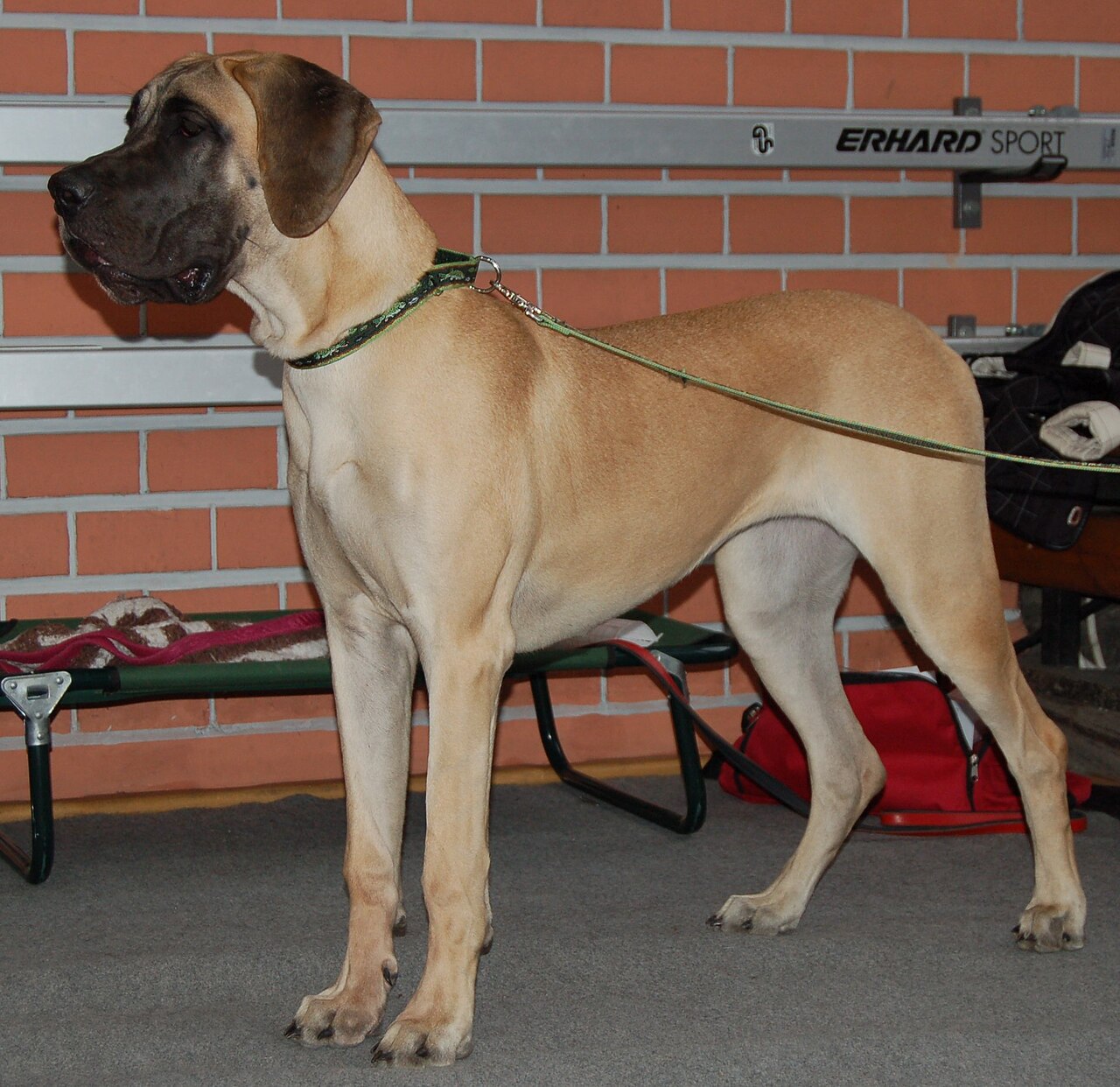

The Great Dane is a 150 lb lap dog that never got the memo about its size — the 'Apollo of Dogs' spends most of its day leaning on people, draping itself over furniture, and gazing at you with theatrical devotion. Adults are surprisingly mellow and apartment-compatible. The devastating catch: you get all this magnificence for only 7-10 years, and bloat can take them overnight.
Height
28-32 in
Weight
110-175 lbs
Lifespan
7-10 years
Coat
Short, smooth single coat
Exercise
60+ min/day
Puppy price
$1,500-$3,000
AKC popularity
#22
Best for
Owners with space on the couch (not necessarily a big yard) who want a mellow, affectionate giant and accept the shorter lifespan that comes with it.
Trait scores
Scored 1–5 from breed-club and kennel-club standards. Individual dogs vary; a lazy Malinois exists somewhere.
Living with a Great Dane
Summarized from public owner discussions — breed subreddits, owner forums, and long-term owner write-ups.
What owners like
- +One of the most affectionate giant breeds; the lean, the lap-sitting attempts, and the head-on-your-shoulder move are all standard
- +Surprisingly good apartment dogs if walked daily — they need less exercise than breeds half their size
- +Their sheer silhouette is home security; nobody tests a door with a 34-inch-tall dog behind it
- +Short coat is trivially easy to maintain — quick weekly brush and done
- +Generally polite with other dogs, cats, and strangers when socialized; standoffish is rare, gregarious is common
Common complaints
- −The lifespan is the heartbreak: 7-10 years, and every Dane owner will tell you the last ones are borrowed time
- −Bloat (GDV) is the breed's #1 killer and a true middle-of-the-night emergency — many owners do preventive gastropexy at spay/neuter
- −Everything costs giant-size: food bills, meds dosed by weight, XL crates, and vet procedures that scale with mass
- −The tail is a whip at coffee-table height, the head is at counter height, and 'counter surfing' requires no jumping whatsoever
- −Growing puppies need carefully managed nutrition and exercise — too much of either wrecks giant-breed joints for life
Conditions the breed is prone to
Not a diagnosis list — these are the problems that show up often enough that responsible breeders screen for them. Ask to see the test results.
The Great Dane against its usual rivals
What people ask about the Great Dane
Do Great Danes need a big house and yard?+
Less than you'd think — this is one of Reddit's favorite counterintuitive dog facts. Adult Danes are low-energy couch potatoes who need a daily walk and a sprint or two, not acreage. Plenty live happily in apartments. What they do need is floor space for a dog the size of a loveseat, and an elevator helps since stairs get hard on senior joints.
What is bloat and why do Dane owners obsess over it?+
Bloat (GDV) is when the stomach fills with gas and twists — it kills within hours and Great Danes are the highest-risk breed in existence, with some studies suggesting over a third experience it in their lifetime. Owners learn the symptoms (unproductive retching, distended belly, pacing) like CPR. Many get a preventive gastropexy, which tacks the stomach and largely prevents the fatal twist.
How long do Great Danes live?+
Typically 7-10 years, and that's the number that talks the most people out of the breed. Bloat, heart disease, and bone cancer are the main culprits. You can improve the odds with health-tested breeders, a gastropexy, lean body weight, and cardiology checks — but going in, you have to make peace with a shorter story.
Are Great Danes easy to train?+
Middling — they're smart but can be gentle-hearted and a bit stubborn, and the AKC rates trainability in the middle of the pack. The non-negotiable is leash manners and no-jumping, because a 140 lb dog that pulls or greets people chest-high is unmanageable no matter how sweet. Train it small, before they're big; you cannot muscle an adult Dane.