Sporting group · Medium · from Germany
German Shorthaired Pointer
Also called: GSP, Deutsch Kurzhaar
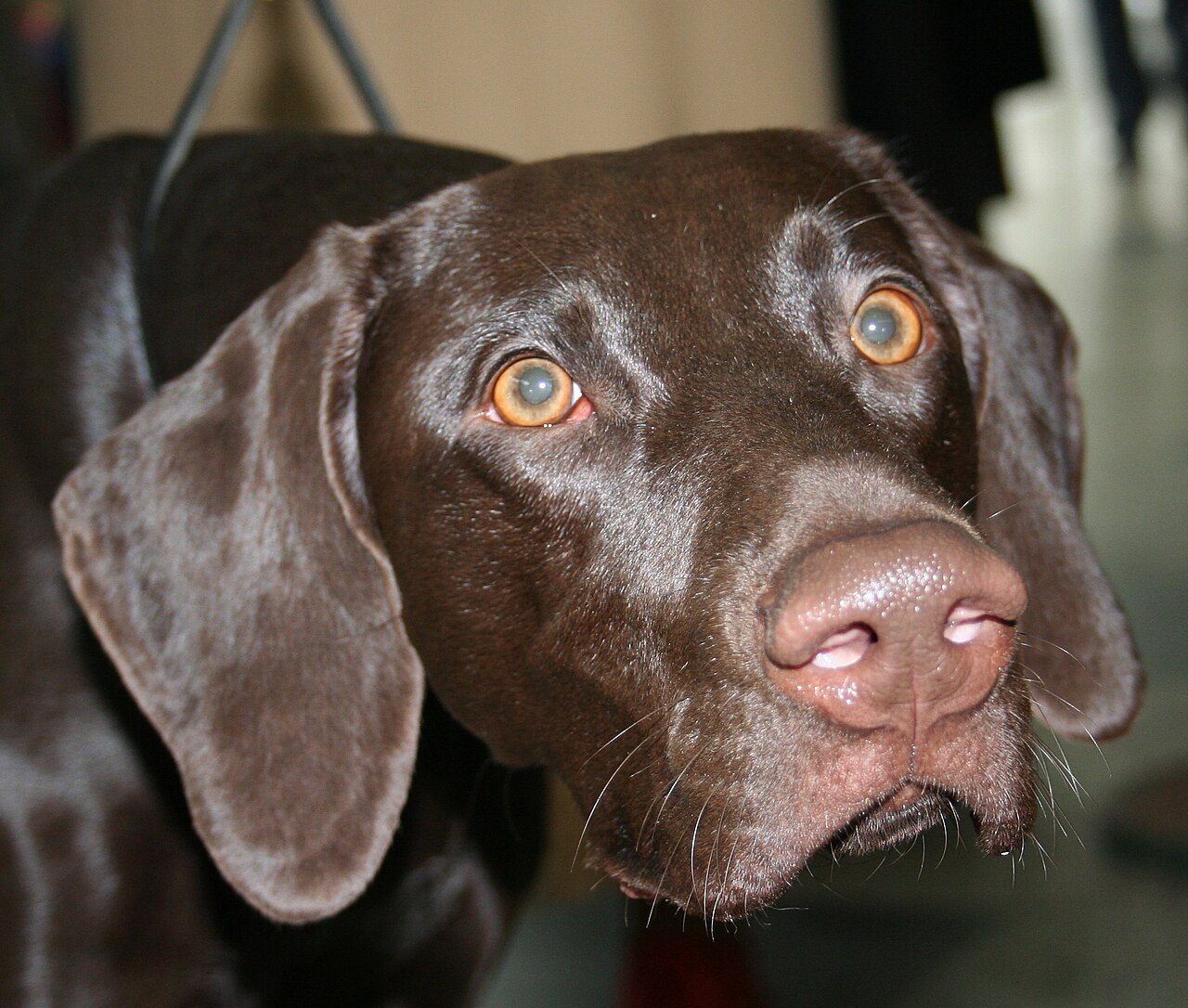

The GSP is the do-everything German bird dog: point, retrieve, swim, run all day, then sprawl across your lap like a 60-lb cat. The honest headline: one of the friendliest and most capable athletes in dogdom, chronically acquired by households that wildly underestimate what 'high energy' means — which is why so many end up in rescue at 18 months.
Height
21-25 in
Weight
45-70 lbs
Lifespan
10-12 years
Coat
Short, dense, water-resistant coat, often liver-ticked
Exercise
120+ min/day
Puppy price
$1,000-$2,500
AKC popularity
#10
Best for
Seriously active people — hunters, trail runners, bird-dog sport folks — who want an affectionate all-day athlete and can honestly commit to two hours of hard exercise daily.
Trait scores
Scored 1–5 from breed-club and kennel-club standards. Individual dogs vary; a lazy Malinois exists somewhere.
Living with a German Shorthaired Pointer
Summarized from public owner discussions — breed subreddits, owner forums, and long-term owner write-ups.
What owners like
- +A genuine all-day athlete — happily logs 10-mile trail runs, then asks what's next
- +Affectionate to the point of comedy: a GSP considers your lap its assigned seat regardless of size
- +Highly biddable for a high-drive breed — eager to work with you, excels at hunting, agility, and dock diving
- +Great with kids and generally social with other dogs — very little sharpness in the breed
- +Nearly zero grooming: short coat, quick towel-dry, done
Common complaints
- −The energy is not a stereotype: two hours of hard daily exercise is maintenance, not a treat, into their senior years
- −An under-exercised GSP systematically dismantles couches, drywall, and landscaping — they're a top surrender breed for exactly this
- −Prey drive means squirrels, birds, rabbits, and often cats are hunted on sight
- −Escape artists that can clear or climb a 6-foot fence when something feathered is on the other side
- −Slow to mature — you're living with a rocket-fueled adolescent until age 3
Conditions the breed is prone to
Not a diagnosis list — these are the problems that show up often enough that responsible breeders screen for them. Ask to see the test results.
The German Shorthaired Pointer against its usual rivals
What people ask about the German Shorthaired Pointer
How much exercise does a GSP really need?+
More than almost anyone believes before owning one: 1.5-2 hours of genuine hard exercise every single day — running, fetch until your arm falls off, swimming, or field work — plus mental stimulation. A neighborhood walk is a warm-up, not a workout. The dogs flooding GSP rescue are overwhelmingly 1-2 year olds whose families thought a backyard was enough.
Do GSPs ever calm down?+
Somewhat, around age 3, and more by 6-7 — but a GSP is never going to be a low-energy dog, and healthy seniors still want their daily run. The famous GSP off-switch is real but conditional: exercise first, couch potato after. Owners who supply the outlet describe sweet, snuggly house dogs; owners who don't describe tornadoes.
Can a GSP live with a cat?+
Sometimes, with early socialization and management, but it's a real gamble — this is a versatile hunting breed with strong prey drive toward small fast animals. Puppies raised with confident indoor cats often do fine; bringing an adult GSP into a cat home is much riskier. Outdoor cats and pocket pets should be considered off the table.
Are GSPs good family dogs?+
For active families, genuinely one of the best — affectionate, playful, patient with kids, and up for every adventure. The two honest caveats: they're bouncy enough to bowl over small children well into adolescence, and the whole family arrangement collapses if the exercise budget isn't met. If your family's idea of fun is hiking and swimming, a GSP will be your favorite member.