Sporting group · Large · from Canada (Newfoundland)
Labrador Retriever
Also called: Lab
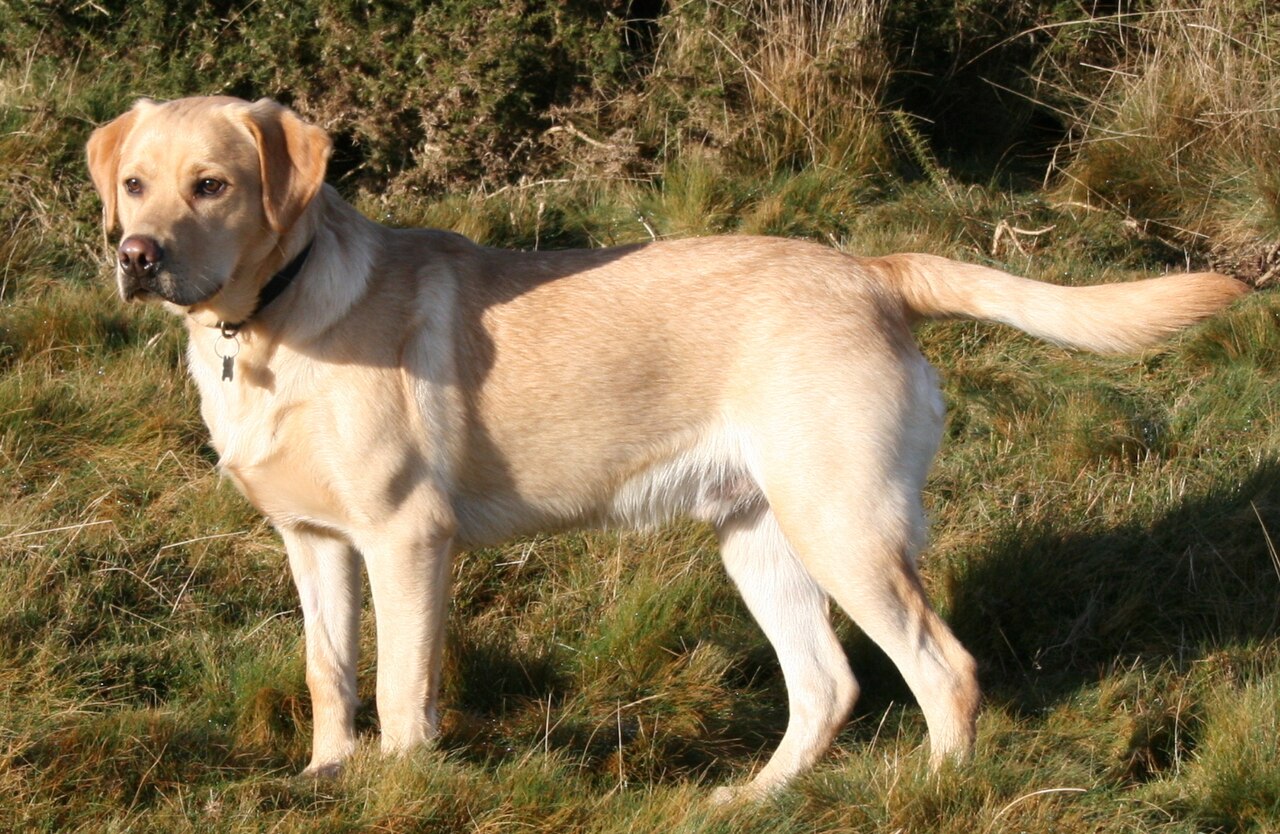

The Lab held the #1 AKC popularity spot for 31 straight years, and the formula hasn't changed: a cheerful, athletic retriever that's good at basically everything from duck blinds to guide-dog work. The honest headline: the world's best family dog wrapped around a stomach with no off switch, and far more energy than the stereotype suggests.
Height
21.5-24.5 in
Weight
55-80 lbs
Lifespan
11-13 years
Coat
Short, dense double coat
Exercise
80+ min/day
Puppy price
$1,200-$3,000
AKC popularity
#2
Best for
Active families who want a do-everything, bombproof companion and can outlast a very energetic first three years.
Trait scores
Scored 1–5 from breed-club and kennel-club standards. Individual dogs vary; a lazy Malinois exists somewhere.
Living with a Labrador Retriever
Summarized from public owner discussions — breed subreddits, owner forums, and long-term owner write-ups.
What owners like
- +Bombproof, forgiving temperament — the reason they dominate service-dog and guide-dog programs worldwide
- +Endlessly trainable and eager — a Lab will work for kibble like it's filet mignon
- +Wash-and-wear short coat — a hose-off and a towel after the muddiest hike
- +Massive gene pool means plenty of health-tested breeders, field lines, show lines, and Labs in rescue
Common complaints
- −Sheds shockingly for a short-coated dog — the dense undercoat produces year-round fur plus seasonal blowouts
- −Will eat anything that fits in its mouth — socks, rocks, corn cobs — and Labs are frequent flyers for obstruction surgery
- −Genuinely bottomless appetite (many Labs carry the POMC 'always hungry' gene variant), so obesity is the breed's #1 health problem
- −An under-exercised Lab is a demolition crew — chewed drywall and excavated yards are classic complaints
- −The otter tail clears coffee tables at head height for toddlers, and ear infections are constant if they swim
Conditions the breed is prone to
Not a diagnosis list — these are the problems that show up often enough that responsible breeders screen for them. Ask to see the test results.
The Labrador Retriever against its usual rivals
What people ask about the Labrador Retriever
What's the difference between English and American (field) Labs?+
English/bench Labs are blockier, heavier, and generally mellower; American/field Labs are leggier, leaner, and bred for drive — noticeably more energy and intensity. For a family pet, most people are happier with bench lines; for hunting or dog sports, field lines shine. Ask the breeder which they breed for, because the difference in daily energy is real.
When do Labs finally calm down?+
The running joke on Lab forums is 'around age three... or never.' Realistically, most Labs mellow noticeably between 2 and 4, but they stay playful and food-obsessed for life. If you want a calm dog from day one, consider an adult Lab from rescue — the puppy and adolescent phases are the hardest part of the breed.
Are Labs good apartment dogs?+
They can be, but only if you're honest about the exercise math: an hour-plus of real activity every day, rain or shine, not just a leash walk around the block. A well-exercised Lab will happily nap in a studio apartment; an under-exercised one will eat your couch. Elevators, stairs, and a young Lab's enthusiasm are also a workout in themselves.
Why is my Lab always hungry?+
It's not bad manners — a significant share of Labs carry a POMC gene mutation that genuinely blunts the feeling of fullness. That's why they're so easy to train with food and so prone to obesity. Measure meals, use part of the ration for training, and ignore the Oscar-worthy starving act; a lean Lab lives meaningfully longer than a fat one.