Terrier group · Medium · from United States
American Staffordshire Terrier
Also called: AmStaff
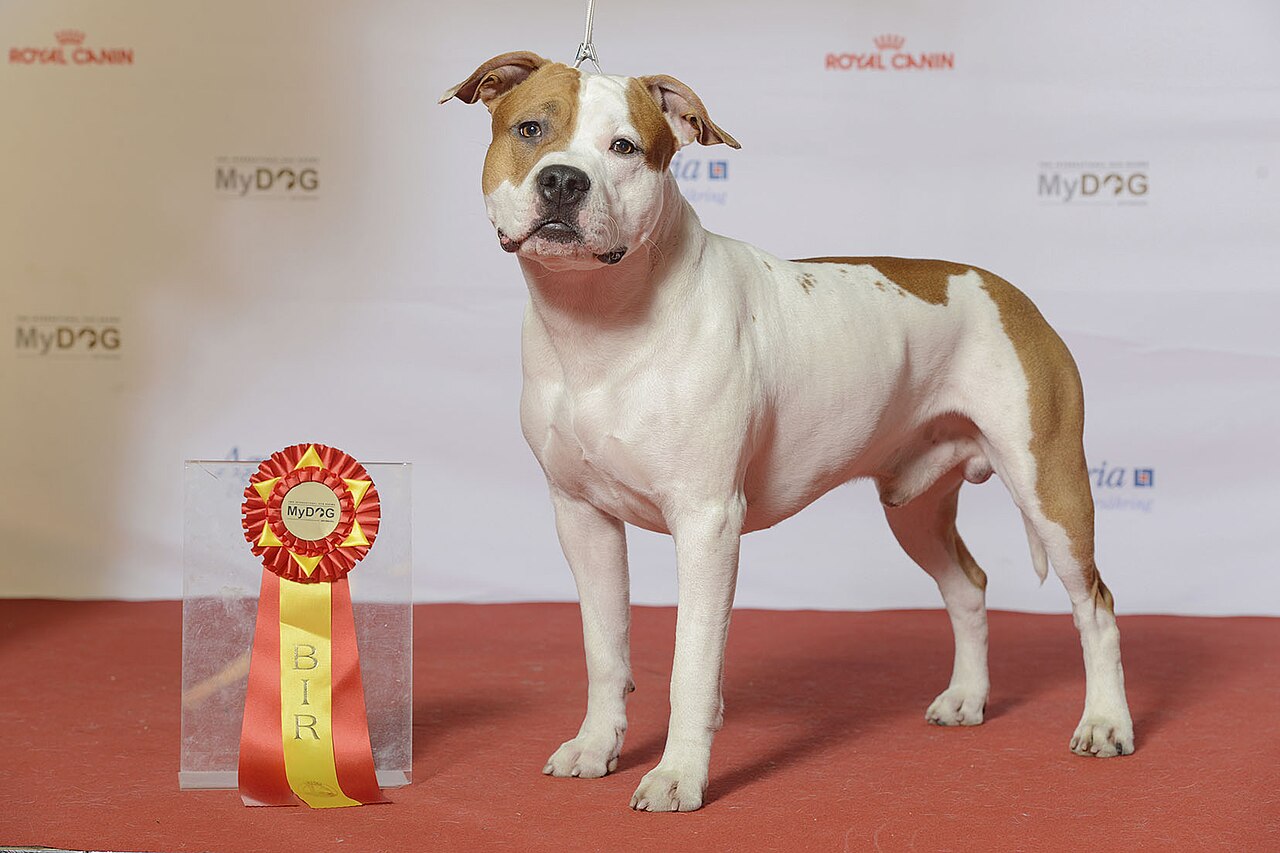

The American Staffordshire Terrier is the AKC's branch of the bull-and-terrier family tree — bred for the show ring since the 1930s, which mellowed the type into a confident, people-loving companion. The honest headline: an AmStaff is functionally a 'pit bull' in the eyes of every landlord, insurer, and breed law, so you get the wonderful family dog and the paperwork headaches together.
Height
17-19 in
Weight
40-70 lbs
Lifespan
12-16 years
Coat
Short, stiff, glossy coat
Exercise
90+ min/day
Puppy price
$1,200-$2,500
AKC popularity
#97
Best for
Committed owners who want the AKC's show-bred take on the bull-and-terrier — affectionate, trainable, muscular — and accept the same legal and dog-management realities as any 'pit bull type' dog.
Trait scores
Scored 1–5 from breed-club and kennel-club standards. Individual dogs vary; a lazy Malinois exists somewhere.
Living with a American Staffordshire Terrier
Summarized from public owner discussions — breed subreddits, owner forums, and long-term owner write-ups.
What owners like
- +AKC recognition means an actual infrastructure of health-tested, temperament-titled breeders you can vet
- +Deeply affectionate and devoted — this is a dog that wants to be touching you at all times
- +Smart and trainable with real work ethic; AmStaffs title in obedience, agility, and nose work
- +Short glossy coat is about as low-maintenance as grooming gets
- +Sturdy, patient, and playful with their family's children when properly raised and supervised
Common complaints
- −Lumped under every 'pit bull' ban and restriction: BSL, landlord blacklists, and insurance exclusions apply to AmStaffs by name in most policies
- −Dog-selectivity commonly emerges at maturity even in well-socialized dogs — lifelong management, not a training phase
- −Cerebellar ataxia (NCL-A) is a breed-specific neurological disease; only buy from breeders who DNA-test for it
- −Strong, muscular, and enthusiastic — without leash training they will tow you, and jumping greetings can flatten grandma
- −High exercise and chew drive; under-stimulated AmStaffs redecorate via couch demolition
- −Skin allergies are common and can mean years of special food and vet dermatology
Conditions the breed is prone to
Not a diagnosis list — these are the problems that show up often enough that responsible breeders screen for them. Ask to see the test results.
The American Staffordshire Terrier against its usual rivals
What people ask about the American Staffordshire Terrier
What's the difference between an AmStaff and an American Pit Bull Terrier?+
They share ancestry and split about a century ago: the AKC recognized the AmStaff in 1936 and bred for conformation shows, while the APBT stayed UKC-registered with a wider range of sizes and working lines. In practice AmStaffs are more uniform in look and often somewhat mellower, but the overlap is huge — some dogs are dual-registered as both. Legally and socially, the distinction rarely matters; breed laws treat them the same.
Do breed bans and insurance restrictions apply to AmStaffs?+
Almost always yes — AmStaffs are explicitly named in most breed-specific legislation, landlord pet policies, and homeowner-insurance exclusion lists, and AKC papers don't exempt you. Before getting one, check your city ordinances, your lease, and your insurance policy in writing. This is the single most common reason AmStaffs end up in shelters through no fault of their own.
Are AmStaffs good family dogs?+
With their own family, they're exceptional — affectionate, playful, tolerant, and devoted, and well-bred AmStaffs are temperamentally very stable. Standard big-strong-dog rules apply: supervise with kids, teach polite greetings, and give them enough exercise that their enthusiasm doesn't bowl anyone over. Where owners must be realistic is with other dogs, not people.
What is cerebellar ataxia and should I worry about it?+
NCL-A is a hereditary neurological disease in AmStaffs that causes progressive loss of coordination, usually appearing in middle age, with no cure. The good news: there's a DNA test, so responsible breeders test breeding stock and the disease is entirely avoidable in well-bred litters. Ask any breeder for both parents' ataxia results — a good one will volunteer them.